Dawn of the Car Boot Zombies: Britain's Weekly Pilgrimage to Purchase Absolute Rubbish
The 5am Calling
While sensible people sleep off their Saturday night regrets, Britain's car boot pilgrims are already stirring. By 5:30am, they're dressed in their "field appropriate" attire—waterproof jackets that have seen more boot sales than actual weather, and shoes that long ago surrendered to the inevitable mud destiny.
These are not morning people. These are not even people who enjoy shopping, in any conventional sense. They are members of Britain's second-largest religion: the Church of Questionable Bargains, and Sunday is their holy day.
The Faithful Gather
In car parks across the nation, the congregation assembles. They arrive clutching Thermos flasks and tote bags with the grim determination of medieval crusaders. The early morning mist hasn't lifted, but already they're circling the field like fashion vultures, eyeing up which stall-holder looks most likely to have "accidentally" underpriced a vintage Hermès scarf.
Spoiler alert: there is no vintage Hermès scarf. There never was. There never will be.
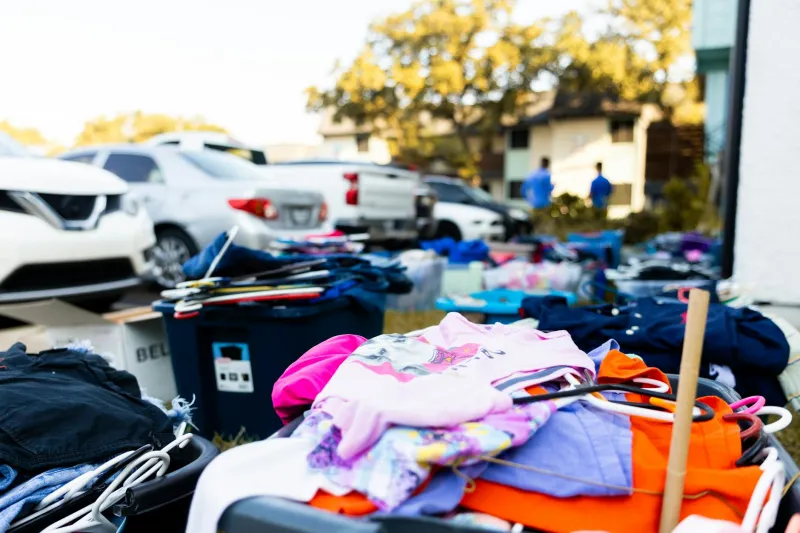
What there is, spread across trestle tables with the reverence usually reserved for archaeological artifacts, is the accumulated detritus of British domestic life. Broken jewellery. Exercise equipment that gave up the ghost in 1987. Books with suspicious stains. Clothes that were questionable when they were new and have not improved with age.
The Psychology of the Hunt
Meet Margaret, 54, from Basingstoke. She's been car boot sailing for twelve years and has never once bought anything she actually needed. Her spare room is a museum of boot sale victories: a sequinned cardigan (missing three sequins), a belt with a broken buckle ("I'll fix it"), and approximately 847 pieces of costume jewellery that turn her neck green.
"It's not about what you find," Margaret explains, clutching a ceramic owl of dubious artistic merit. "It's about the possibility. You never know what's around the corner."
What's around the corner is usually another table of tat, but Margaret's optimism is unshakeable. She is part of a vast psychological experiment: what happens when you combine the British love of queuing with the thrill of gambling and the social acceptability of hoarding?
The Vintage Delusion
The car boot sale has become ground zero for Britain's collective vintage fantasy. Every polyester blouse from 1987 is now "retro." Every broken handbag is "distressed leather." Every faded band t-shirt is a "rare find," despite being clearly purchased from Primark in 2003.
The sellers, bless them, play along with this elaborate fiction. "That's a proper vintage piece, that is," they'll say of a M&S jumper from last season, priced at £3 when it originally cost £12.99. Everyone knows it's not vintage. Everyone pretends it is. This is the British way.
The Economics of Nonsense
The mathematics of car boot shopping are fascinating in their complete disregard for logic. Boot sale regulars will drive 20 miles, spend £2 on entry, £5 on petrol, and £3 on a bacon sandwich, all to save 50p on a item they don't need. When challenged on this arithmetic, they become defensive.
"But you can't put a price on the experience," they insist, which is technically true—the experience of standing in a muddy field at dawn examining other people's unwanted possessions is indeed priceless, in that no sane person would pay for it.
The Ritual Purchase
Every car boot pilgrim must buy something. This is the unwritten rule. You cannot spend three hours examining the contents of someone else's attic and leave empty-handed. It's considered rude, possibly un-British.
So they buy a belt they'll never wear and a cardigan that fits nobody. They negotiate fiercely over 50p, as if this small victory will justify the entire expedition. The seller, equally committed to the performance, eventually "gives in" to the reduced price, both parties satisfied with their roles in this weekly theatre.
The Journey Home
The drive home is always the same. Initial satisfaction ("Got some lovely bits!") gradually gives way to creeping doubt. By the time they're unpacking their purchases, the spell has broken. The belt is indeed broken. The cardigan is indeed unwearable. The ceramic owl is indeed hideous.
But it doesn't matter. Next Sunday, they'll be back. Because car boot sales aren't really about finding treasure—they're about the shared British experience of making terrible decisions in groups, then pretending they were good ideas.
The Donation Cycle
The beautiful irony is that within twelve months, most car boot purchases will be donated to charity shops, where they'll be priced higher than they were at the boot sale. Some particularly committed enthusiasts will then buy them back, having forgotten they originally owned them.
This creates a perfect circular economy of tat, with the same broken belt and sequinned cardigan circulating through Britain's second-hand market like sartorial tumbleweed.
The True Purpose
Perhaps the real treasure was the friends we made along the way—specifically, the temporary alliances formed while jointly examining a box of mixed buttons, or the knowing nods exchanged over a particularly optimistically-priced handbag.
Car boot sales are Britain's great leveller. Doctors and dustmen, teachers and taxi drivers, all united in their willingness to get up at dawn to buy things they don't need from people they'll never see again.
It's community. It's tradition. It's completely mental. And next Sunday, they'll all be back, because somewhere out there, in a muddy field, is a vintage Jaeger blazer with their name on it.
Spoiler alert: there isn't.