September's Wardrobe Witch Trial: How Britain Gets Annually Convinced Its Clothes Are Spiritually Bankrupt
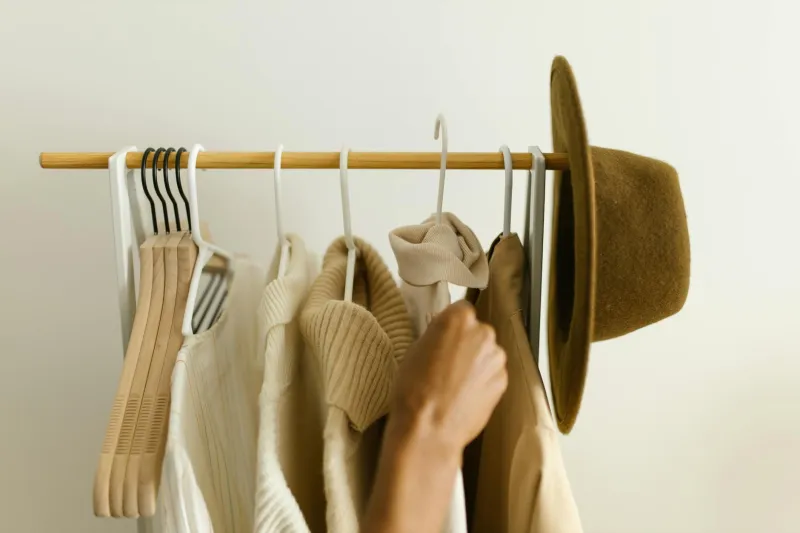
The Annual Spiritual Audit of Your Wardrobe
As surely as leaves turn brown and central heating bills arrive to ruin your month, September brings Britain's most predictable ritual: the Great Wardrobe Shaming. This is the sacred time when fashion magazines, influencers, and anyone with access to a Ring Light solemnly inform the nation's women that their entire summer wardrobe has become spiritually void and must be replaced with seven pieces in what can only be described as brown with better publicists.
"Cognac," breathes the sales assistant at & Other Stories, gesturing towards a £89 jumper that is demonstrably the colour of a conker. "It's the new black."
The new black, it seems, arrives every September with the reliability of a tax demand, always accompanied by its seasonal siblings: rust (orange that went to university), forest (green that reads broadsheet newspapers), and the mysterious shade known only as 'camel' – a colour that actual camels would probably find presumptuous.
The Seven-Piece Salvation Army
At the heart of this annual conversion lies the Capsule Wardrobe Conspiracy – the notion that British women can achieve sartorial enlightenment through the strategic purchase of exactly seven items. Not six, which would be insufficient for true transformation. Not eight, which would suggest excess and spiritual weakness. Seven pieces, as if Moses himself had descended from Mount Sinai clutching a Cos shopping bag.
 Photo: Mount Sinai, via farm3.staticflickr.com
"It's about intentional dressing," explains Sophie, 29, who has just spent £400 on what she calls her "autumn investment pieces" – a collection of brown garments so similar they could be mistaken for a uniform. "Each piece needs to work with every other piece. It's like building a capsule of yourself."
A capsule of yourself, it transpires, costs roughly £600 and looks exactly like what everyone else's capsule of themselves looks like, suggesting either a remarkable coincidence or that British women are all actually the same person in different bodies.
The Transitional Dressing Tribunal
The most insidious weapon in September's arsenal is the concept of 'transitional dressing' – the idea that changing seasons require not just different clothes, but an entirely different approach to being human. Summer You, with her optimistic florals and naive belief in sunshine, must be ceremonially executed to make way for Autumn You, who understands the sophisticated melancholy of cashmere and the intellectual weight of a well-structured blazer.
"You can't just wear summer clothes in autumn," declares Hannah, scrolling through her Instagram feed where every influencer is wearing variations of the same beige outfit. "It's about respecting the season. It's about emotional alignment with your environment."
Emotional alignment with the environment, apparently, requires spending more money on clothes in September than most people spend on their cars' annual service. But this isn't consumption – this is spiritual growth through strategic purchasing.
The Guilt-Trip Industrial Complex
Behind every autumn wardrobe overhaul lies a sophisticated guilt-manufacturing operation. Fashion magazines deploy psychological warfare with headlines like "Is Your Wardrobe Stuck in the Past?" and "The One Piece That Will Transform Your Entire Autumn." These aren't suggestions – they're interventions, designed to make women look at their perfectly functional clothes and see only failure.
"I looked at my wardrobe and realised I had nothing to wear," says Emma, standing in front of a closet containing approximately 400 items of clothing. "Nothing felt right for autumn. Nothing felt like me."
The 'me' she's referring to is apparently someone completely different from the person who bought all those clothes just months earlier – a shape-shifting entity whose identity can only be maintained through regular infusions of new garments in seasonally appropriate colours.
The Instagram Autumn Uniform
Scroll through British Instagram in September and witness a phenomenon that would fascinate sociologists: thousands of women, all convinced they're expressing their individual style, wearing virtually identical outfits. The Autumn Uniform has been established by some invisible committee, and deviation from it suggests either poverty or poor judgment.
The uniform consists of: an oversized blazer in 'camel' (brown), straight-leg trousers in 'cognac' (brown), a chunky knit in 'rust' (brown), ankle boots in 'tan' (brown), and a structured bag in what retailers call 'chocolate' but what previous generations would have simply called brown.
"It's not about following trends," insists Lucy, who has just purchased an outfit identical to seventeen other women in her office. "It's about finding your personal style."
Her personal style, it seems, is identical to everyone else's personal style, suggesting either a remarkable coincidence or that personal style has been outsourced to a central authority.
The Economics of Seasonal Guilt
The numbers behind Britain's autumn wardrobe panic reveal the true scale of this psychological operation. The average British woman spends £312 on her 'autumn refresh' – money that could fund a weekend in Paris, a month's groceries, or approximately 47 cups of coffee from that expensive place near the office.
But this isn't mere spending – it's investment in emotional wellbeing, personal growth, and what marketing departments have taught us to call 'self-care.' The woman who questions whether she really needs a £150 jumper in a colour that didn't exist last season is clearly suffering from a poverty of imagination.
"It's not about the money," explains Charlotte, adding a £89 scarf to her basket. "It's about feeling like myself. And autumn me needs different things than summer me."
Autumn Me, apparently, is a more expensive version of Summer Me, requiring an entirely new wardrobe to feel authentic.
The Colour Psychology Scam
Perhaps the most brilliant aspect of the autumn wardrobe conspiracy is how it has convinced British women that colours have moral weight. Bright colours become 'juvenile,' pastels become 'dated,' and anything that suggests joy or optimism is deemed 'inappropriate for the season.'
"Autumn is about embracing deeper, more sophisticated tones," says the woman behind the counter at COS, gesturing towards a rail of clothes that look like they've been dipped in tea. "These colours reflect the maturity of the season."
The maturity of the season, it turns out, costs £200 per item and looks suspiciously like what people used to call 'drab' before marketing departments got involved.
The Final Reckoning
By October, the transformation is complete. Britain's women emerge from their September shopping sprees dressed like a coordinated army of autumn leaves, each convinced she's achieved something profound through the strategic purchase of brown clothing. The summer wardrobe lies forgotten in storage bags, awaiting its own resurrection and subsequent execution next year.
"I feel so much more myself now," says Sarah, wearing an outfit that cost more than her monthly rent and looks identical to what forty-seven other women are wearing on her morning commute.
And perhaps that's the real magic of the autumn wardrobe ritual – not that it makes women look different, but that it makes them all look the same while feeling uniquely transformed. It's democracy through conformity, individuality through identical purchasing decisions, and self-expression through collective surrender to the tyranny of seasonal colour palettes.
The witch trial is complete. Summer You has been found guilty of inappropriate optimism and sentenced to storage. Long live Autumn You, identical to everyone else's Autumn You, expensive and brown and spiritually aligned with the season.