Wedding Guest Warfare: Decoding Britain's Most Sadistic Dress Code Conspiracy
The Annual Panic Spiral Begins
There's a special circle of hell reserved for whoever invented the phrase 'smart casual' and decided it belonged on wedding invitations. Every spring, as wedding season approaches, millions of British women enter a collective state of sartorial panic triggered by two innocent words that mean absolutely nothing and everything simultaneously.
The wedding invitation arrives, elegant and cream-coloured, bearing news of eternal love and open bars. Then you spot it, lurking in the bottom corner like a passive-aggressive landmine: 'Dress Code: Garden Party Chic.' Suddenly, your entire wardrobe becomes inadequate, your fashion sense questionable, and your relationship with the bride subject to forensic analysis based on your interpretation of what constitutes 'chic' in a garden setting.
The Linguistic Terrorism of Modern Nuptials
British couples have transformed wedding dress codes into an elaborate form of psychological warfare, deploying phrases that sound sophisticated but translate roughly to 'figure it out yourself, and we'll judge you accordingly.' Each code is a Rorschach test of social anxiety, designed to reveal your deepest insecurities about class, taste, and your understanding of what constitutes appropriate celebration attire.
'Cocktail attire' might sound straightforward until you realise it could mean anything from a slip dress and heels to a full-length gown, depending on whether the couple's reference point is Sex and the City or Downton Abbey. One woman's 'cocktail chic' is another's 'trying too hard,' and there's no appeals process.
The Great Interpretation Catastrophe
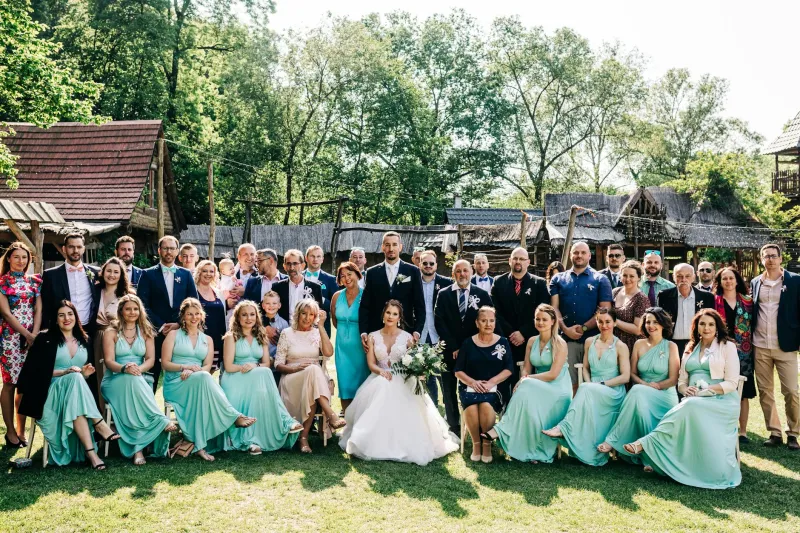
Last summer, a wedding in the Cotswolds requested 'Rustic Elegance,' a phrase that sent thirty female guests into existential crisis. The results were spectacular in their diversity: everything from floaty maxi dresses and flower crowns to structured blazers and nude court shoes appeared, each guest convinced they'd cracked the code whilst secretly terrified they'd misunderstood entirely.
Sarah from Bath interpreted 'rustic elegance' as 'expensive clothes that look like you found them in a barn.' She wore a £300 'distressed' linen dress from Toast and felt overdressed next to her sister, who'd gone for 'elegant clothes suitable for a barn' in a midi dress from Whistles.
Meanwhile, the bride's university friend arrived in what could only be described as 'Little House on the Prairie meets London Fashion Week' – a £800 Zimmermann dress that somehow incorporated both ruffles and sequins whilst maintaining an air of countryside authenticity.
The Mother's Wildcard Factor
No discussion of British wedding guest attire is complete without acknowledging the Maternal Wildcard – that moment when your mother, having received the same dress code, arrives wearing something that defies all known laws of fashion interpretation. She will have spent equal amounts on her outfit, consulted the same Pinterest boards, and arrived at a completely different sartorial destination.
'Smart casual' to a mother of the bride apparently translates to 'the most formal outfit I own, plus a hat that could double as satellite equipment.' She will look magnificent and completely inappropriate, and she will be utterly confident in her choices because she 'checked with Aunt Margaret, and she agreed it was perfect.'
The Dress Code Translation Matrix
Smart Casual: Could mean literally anything from jeans and a blazer to a cocktail dress. Proceed with caution and a backup outfit.
Garden Party Chic: Suggests florals and flowing fabrics but could equally mean structured day wear suitable for outdoor consumption of Pimm's. Weather contingency planning essential.
Cocktail Attire: The most dangerous of all codes. Ranges from 'after-work drinks' to 'Met Gala junior edition.' Study the couple's Instagram for clues about their definition of sophistication.
Festive Luxe: A genuinely sociopathic invention that combines celebration with opulence in ways that could justify anything from sequined mini-dresses to full evening gowns. Approach with extreme caution.
Relaxed Elegance: An oxymoron designed to induce paralysis. Nothing about choosing wedding guest attire is relaxed, and elegance is entirely subjective.
The Regional Variations
Wedding dress code interpretation varies dramatically across Britain's social geography. A London 'smart casual' wedding might see guests in designer jeans and £200 trainers, whilst the same code in rural Scotland could require tweed and proper shoes. The couple's university background, postcode, and Instagram aesthetic all factor into the complex equation of appropriate guest attire.
A recent wedding in Yorkshire requested 'Country Chic,' which London guests interpreted as 'Barbour jacket and Hunter wellies' whilst local attendees understood as 'your best dress, suitable for a barn.' The resulting clash of interpretations created a guest list that looked like a fashion shoot for 'Town & Country' accidentally merged with a 'Vogue' editorial.
The Economics of Guest Anxiety
The wedding guest fashion industry has exploded to meet demand for 'appropriate' attire. Rental services specialising in wedding guest outfits report bookings spike 400% during summer months, as women desperately seek 'garden party appropriate' dresses they'll wear exactly once.
Rent the Runway's UK expansion was built largely on British women's terror of wedding dress codes. The platform's most popular search terms include 'smart casual wedding,' 'garden party guest,' and 'what is cocktail attire help me please' (actual search term, according to their data).
The Silent Judgement Economy
The cruelest aspect of wedding guest dress codes is the silent judgement that follows. There's no feedback mechanism, no post-event analysis of who 'got it right.' You simply attend, hope for the best, and spend the reception analysing other guests' interpretations for clues about your own performance.
Photographs become evidence in an unspoken trial where your understanding of 'garden party chic' is weighed against thirty other interpretations, none of which will be identical. The bride's cousin will have nailed it, somehow, whilst you'll spend months wondering if your floral midi was too formal or not formal enough.
The Great British Compromise
Faced with this sartorial terrorism, British women have developed sophisticated coping mechanisms. The 'blazer strategy' involves wearing something potentially inappropriate but adding a blazer to suggest you understand the concept of 'smart.' The 'accessories hedge' deploys statement jewellery that can elevate or downplay an outfit depending on the room's general tone.
Most popular is the 'safe middle ground' approach – a midi dress in navy or floral print, paired with block heels and a lightweight cardigan. This ensemble can be dressed up or down, works for most seasons, and suggests you understand the assignment without trying too hard to excel at it.
The Future of Nuptial Torture
As weddings become increasingly Pinterest-perfect, dress codes grow more elaborate and meaningless. Recent innovations include 'Bohemian Luxe,' 'Modern Vintage,' and the genuinely incomprehensible 'Elevated Casual Elegance.' Each new phrase adds another layer to the psychological complexity of guest attendance.
Some progressive couples have begun including photo examples with their dress codes, a mercy that should be legally mandated. Others provide seasonal guidance or venue-specific suggestions that demonstrate actual consideration for their guests' sanity.
But for most, the wedding dress code remains Britain's most enduring tradition of polite torture – a system designed to stress-test relationships whilst ensuring everyone looks appropriately festive for the photographer.
In the end, perhaps the real dress code was the anxiety we felt along the way. And honestly, that anxiety probably looked fabulous with the right accessories.