Architectural Millinery Madness: When British Wedding Guests Declared War on Subtlety

The Genesis of Decorative Head Chaos
Once upon a time, British wedding guests wore hats. Actual hats. With brims and crowns and the structural integrity of proper headwear. Then someone—history has mercifully forgotten who—decided that what the nation really needed was a hat that wasn't quite a hat, attached to the head with the engineering confidence of a paper clip.
Thus was born the fascinator, Britain's most bewildering contribution to international fashion, and the spark that would ignite a headwear arms race that makes the Cold War look like a friendly disagreement.
The Innocent Years
In the beginning, fascinators were modest creatures. A small felt disc, perhaps adorned with a single feather or a tasteful silk flower, perched at a jaunty angle and secured with what can only be described as wishful thinking. They were the millinery equivalent of a polite cough—present, but not demanding attention.
Wedding guests of the early fascinator era moved carefully, avoiding sudden movements that might dislodge their delicate headwear. Hugging was conducted with military precision. Dancing was limited to gentle swaying. It was a more civilised time.
The Escalation Begins
But Britain, never content to leave well enough alone, began to push boundaries. If one feather was elegant, surely three feathers were more elegant? If a small silk flower was charming, wouldn't a cluster of silk flowers be absolutely delightful?
The answer, as anyone who has attended a wedding in the past decade can attest, is emphatically no. But by then, it was too late. The fascinator arms race had begun in earnest.
Enter the Mother of the Bride
The true catalyst for fascinator escalation was the emergence of the Competitive Mother of the Bride. No longer content with a simple hat, these formidable women began commissioning headpieces that required their own structural engineer. Fascinators grew taller, wider, more architecturally ambitious.
Suddenly, wedding photographs began to resemble avant-garde art installations. Guests developed neck strain from trying to maintain conversations with women whose headwear extended three feet in any direction. Venue coordinators started requesting advance notice of fascinator dimensions to ensure adequate ceiling clearance.
The Feather Wars
The Great Feather Escalation of 2015-2018 marked a particularly dark period in fascinator history. What began as a single ostrich plume evolved into entire bird sanctuaries balanced precariously on women's heads. Peacock feathers, pheasant plumes, and what appeared to be the complete tail assembly of several exotic birds became the norm.
Wedding venues began to resemble nature documentaries. Guests found themselves inadvertently participating in elaborate mating displays simply by turning their heads. The RSPB issued a statement expressing concern about the sudden spike in demand for decorative plumage.
The Structural Engineering Phase
By 2019, fascinators had evolved beyond mere headwear into architectural achievements. The traditional headband attachment system gave way to complex harness arrangements. Some pieces required assembly instructions. Others came with their own carrying cases.
Milliners began hiring civil engineers as consultants. Wind resistance became a serious consideration. Several wedding venues updated their insurance policies to cover "fascinator-related incidents."
The mother of the bride and the mother of the groom entered into an unspoken competition to see whose headpiece could achieve the most impressive feat of gravity-defying millinery. Weddings became less about celebrating love and more about showcasing advances in decorative structural engineering.
The Terror of Identical Catastrophes
Perhaps no fear strikes deeper into the heart of a British wedding guest than arriving at the church to discover another woman sporting an identically catastrophic feathered abomination. This scenario, known in millinery circles as "The Double Disaster," represents the ultimate social nightmare.
The protocol for such encounters has never been formally established. Both women typically spend the entire event maintaining rigid smiles while positioning themselves at opposite ends of any room, like territorial birds avoiding conflict. Photographers learn to never capture both fascinators in the same frame, lest they create evidence of the fashion apocalypse.
The Instagram Effect
Social media has only accelerated the fascinator arms race. Wedding guests now design their headpieces with Instagram angles in mind. Fascinators must be "story-worthy," capable of generating the kind of social media engagement typically reserved for natural disasters or celebrity scandals.
The hashtag #FascinatorFail has become a genre unto itself, documenting the inevitable moments when architectural millinery meets real-world physics. Wind, doorways, and low-hanging chandeliers have all claimed victims in the ongoing war between ambition and practicality.
The Royal Influence
The Royal Family, bless them, have only encouraged this madness. Every royal wedding or state occasion features headwear that pushes the boundaries of what can reasonably be attached to a human head. Princess Beatrice's 2011 royal wedding fascinator achieved such notoriety it was later auctioned for charity, presumably to fund research into millinery-related trauma.
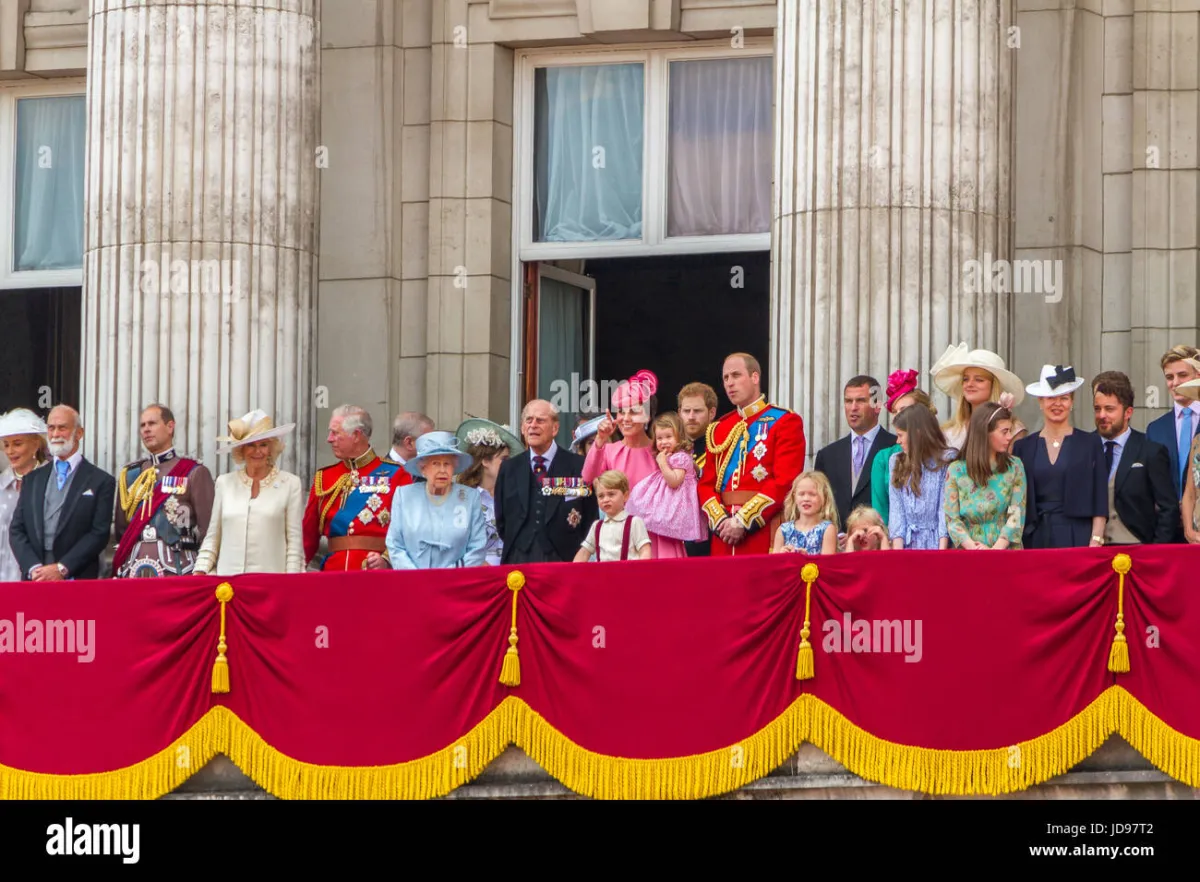 Photo: Royal Family, via c8.alamy.com
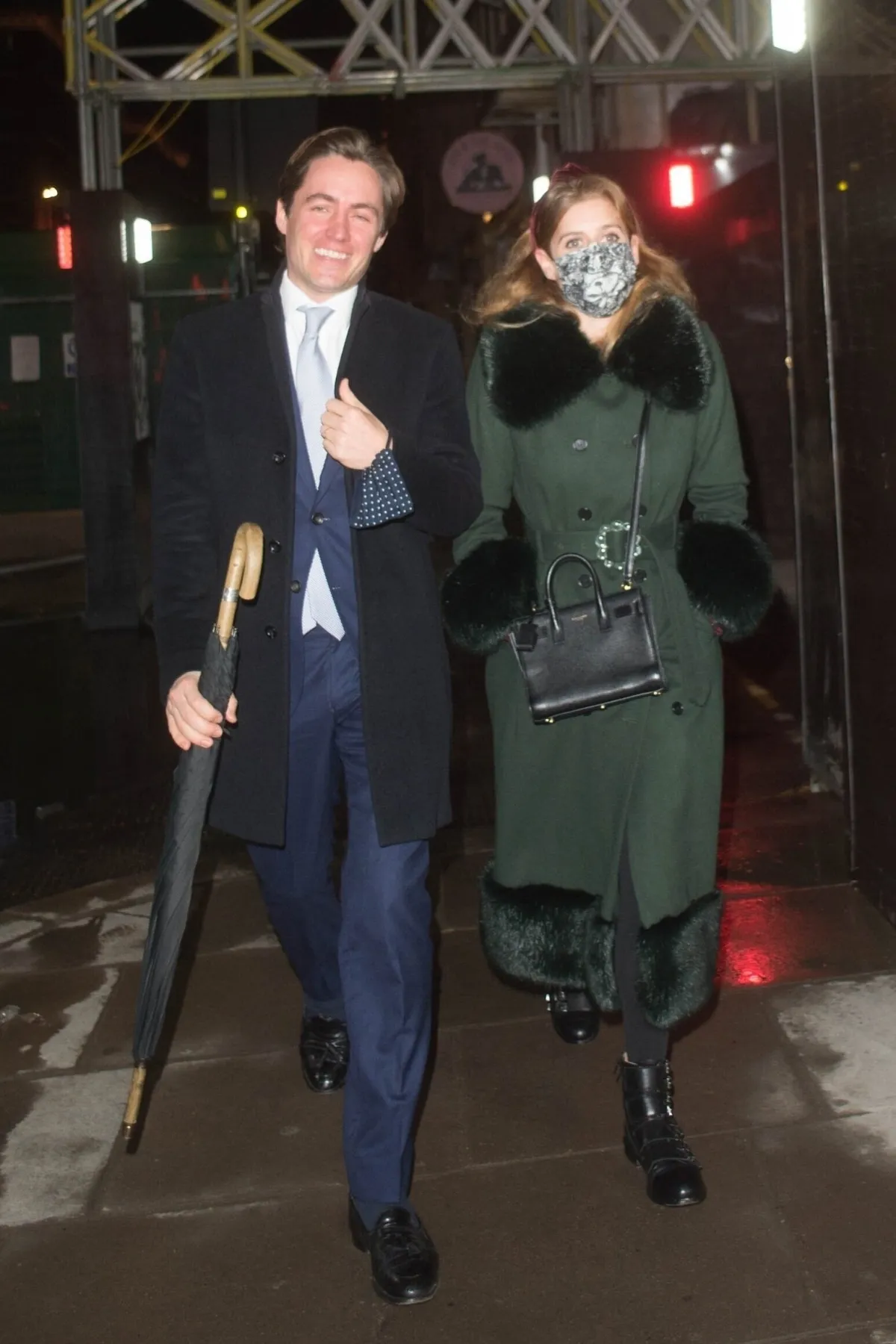 Photo: Princess Beatrice, via images.squarespace-cdn.com
Royal milliner Philip Treacy has become the patron saint of architectural headwear, creating pieces that require their own weather reports. His creations have inspired a generation of British women to believe that bigger is always better when it comes to decorative head furniture.
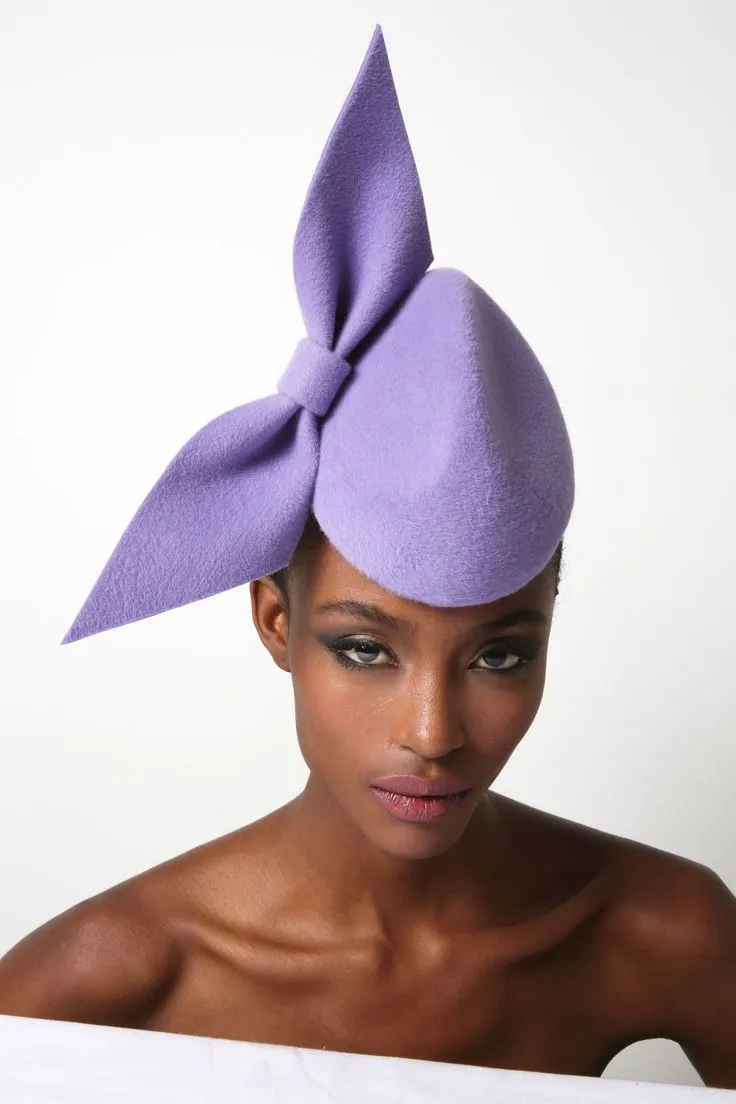 Photo: Philip Treacy, via i.pinimg.com
The Current State of Play
Today's fascinator landscape resembles a millinery arms race with no clear end in sight. Recent innovations include LED lighting, motorised components, and what can only be described as "interactive elements." One recent wedding featured a fascinator with a working weather vane.
Milliners now require planning permission for their more ambitious pieces. Wedding venues have begun designating "fascinator zones" to prevent traffic flow disruption. The Church of England has issued guidelines suggesting that headwear should not obstruct the view of the altar from more than three pews back.
The Future of Decorative Head Chaos
Where does Britain go from here? Some industry experts predict the inevitable development of fascinator drones—headpieces that hover independently, freeing the wearer from the constraints of physical attachment. Others suggest we may see the first fascinator that requires its own postcode.
Until then, British wedding guests will continue to balance increasingly elaborate architectural achievements on their heads, united in the shared delusion that somewhere, in the perfect combination of feathers, flowers, and structural engineering, lies the secret to wedding guest supremacy.
It's a uniquely British form of madness—polite, determined, and completely divorced from practical considerations. Long may it continue, because if we're going to be ridiculous, we might as well be spectacularly, architecturally ridiculous.