Sweat Equity: The British Woman Who Bought Her Cycling Identity in Three Instalments and Has Never Been on a Bike
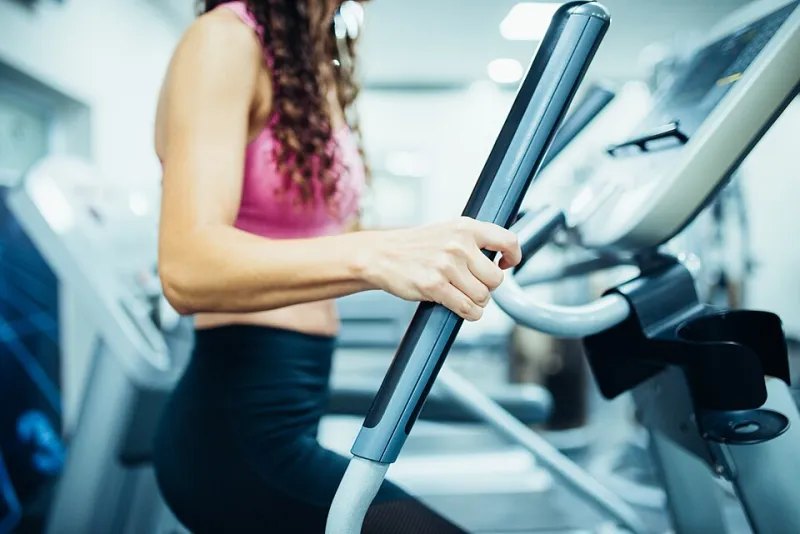
Photo: Shixart1985, CC BY 2.0, via Wikimedia Commons
Claire owns four pairs of cycling leggings. This is not, on its face, remarkable. What is remarkable is that Claire does not cycle. Claire has not cycled since a brief and largely uneventful period in 2003 when she commuted to a temp job in Croydon on a bicycle she subsequently sold on Gumtree for £45. Claire is, however, extremely confident that she is 'a cyclist at heart', and her wardrobe reflects this with an earnestness that borders on the devotional.
The leggings — two pairs from Sweaty Betty, one from Lululemon (purchased during a 'treat yourself' episode following a difficult appraisal), and one from a brand whose name suggests extreme athletic competence and whose price tag confirms it — hang in Claire's wardrobe with the quiet authority of items that have never been asked to do anything difficult. They are, in the language of the athleisure economy, 'investment pieces'. They are also, in the language of reality, trousers.
The Wardrobe as CV
Britain has, over the past decade, developed a new and fascinating relationship with sportswear: one in which the clothes function not as equipment for sport but as evidence of a sporting identity that exists entirely in the abstract. You are not what you eat. You are what you wear, regardless of whether you have ever used it for its stated purpose.
This is not laziness, to be clear. It is something more psychologically interesting. The purchase of high-performance technical clothing represents, for a significant portion of the British middle-class female population, a genuine act of intention. The leggings are not a lie. They are a promise. The promise is simply one that the purchaser has made to a future version of herself who is, by all available evidence, perpetually about three weeks away from taking up running.
The future self is very fit. She does reformer Pilates on Tuesdays, outdoor swimming on alternate Saturdays, and something involving a kettlebell that she has watched a YouTube tutorial about. She has a foam roller and knows what to do with it. She refers to rest days as 'active recovery' with the casual fluency of someone who has earned the phrase through suffering. She is, in every meaningful sense, a different person. But her wardrobe is already here, hanging in Claire's bedroom, waiting.
The Peloton: A Case Study in Optimistic Furniture
In 2021, Claire purchased a Peloton. This was not an impulsive decision. She researched it for four months, watched forty-seven hours of instructor content, joined two Facebook groups, and had a detailed conversation with a woman at a dinner party who described her own Peloton journey with the intensity of a religious conversion. Claire was ready.
The Peloton arrived on a Tuesday. Claire rode it three times in the first week, twice in the second, and once — briefly, and somewhat resentfully — in the third. By April it had acquired a drying rack attachment. By June it was also hosting a pile of books she intended to read, a bag she needed to return to John Lewis, and what appeared to be a decorative throw. The Peloton is now, structurally speaking, the most expensive shelving unit in the house.
This is not Claire's failure. This is the Peloton's business model, which has always understood that the aspiration to exercise is a far larger and more reliable market than the exercise itself. The Peloton does not sell fitness. It sells the feeling of being the kind of person who would, under the right circumstances, be very fit indeed.
Claire still pays the £44 monthly subscription. She watches the classes occasionally, from the sofa, which she has decided counts as 'mental preparation'.
The Vocabulary of Imaginary Athleticism
Perhaps the most impressive achievement of the athleisure-as-identity movement is the language it has generated. Claire does not go for a walk. She does 'low-impact steady-state cardio'. She does not eat lunch; she 'fuels'. She does not feel tired; she is 'in a recovery phase'. She does not own a lot of sportswear for someone who doesn't exercise; she has 'built a functional wardrobe that supports an active lifestyle'.
This vocabulary is borrowed wholesale from the world of professional athletics and applied to a life that involves, on most days, a forty-minute walk to the Co-op and back and an occasional vigorous session of rearranging the Peloton's drying rack. It is not dishonest, exactly. It is aspirational linguistics — the verbal equivalent of wearing the kit.
The Co-op walk, it should be noted, is taken in full technical regalia. The moisture-wicking leggings. The seamless sports bra (£68, Lululemon, 'medium support', which Claire has decided is appropriate for her activity level). The running jacket with the reflective strips, despite it being 2pm on a Wednesday in October and the primary hazard being a reversing Waitrose delivery van. The trainers — God, the trainers — which are engineered for marathon performance and are being used to select between semi-skimmed and oat milk.
The Actual Athletes: A Brief and Guilty Digression
Somewhere in Britain, there are women who buy Sweaty Betty leggings and then go cycling in them. They exist. They are not, if we're honest, the core demographic. The core demographic is Claire, and the thousands of Claires who have collectively made athleisure the fastest-growing segment of the UK clothing market for seven consecutive years.
This is not a criticism. Or rather, it is a criticism delivered with enormous affection, because the Claires of Britain are not deluded — they are optimistic, which is a different and considerably more sympathetic condition. They believe, genuinely, that the right pair of leggings might be the thing that finally tips the balance. That owning the infrastructure of an active life is a reasonable first step toward living one. That the gap between who they are and who they intend to be is bridgeable, and that Sweaty Betty is helping.
They are wrong, statistically speaking. But they are wrong in a way that generates significant tax revenue and keeps the British sportswear industry in a state of buoyant health, so perhaps we should not be too hasty.
The Active Recovery
Claire is, as we speak, considering signing up for a 5K. She has been considering it since 2019. She has the trainers for it. She has the leggings. She has a running app downloaded on her phone that she has opened twice and found 'a bit intense'. She has told three separate people that she's 'thinking of getting into running', which she considers a form of public accountability.
The 5K may happen. It may not. What will definitely happen is that, in the meantime, Claire will continue to dress as though it is imminent, to walk to the Co-op in full technical kit, and to describe her lifestyle as active with a confidence that her Peloton — buried under laundry, glowing softly in the corner — can neither confirm nor deny.
The leggings, for their part, are ready. They are always ready. That is, after all, what you pay for.