Britain's Domestic Appliance Theatre: The Seven Ironing Boards We Own But Never Touch
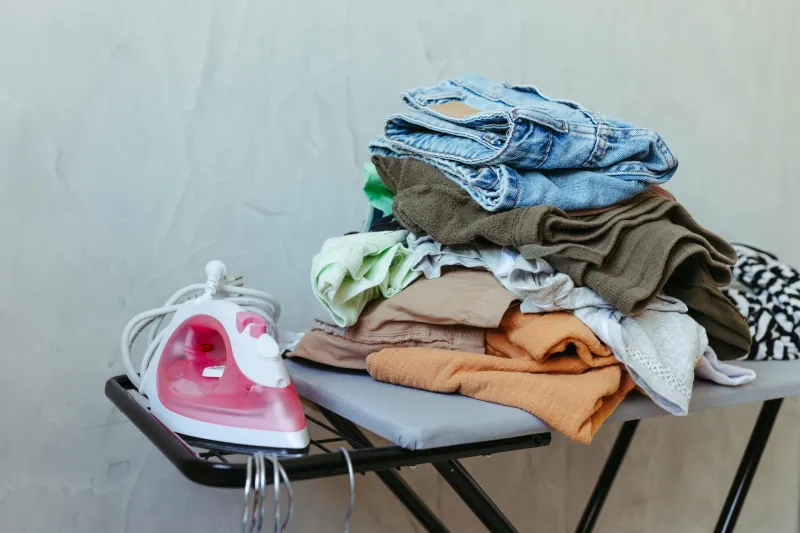
The Silent Army Lurking Behind Our Doors
In homes across Britain, a strange domestic drama unfolds daily. Behind bedroom doors, wedged under staircases, and folded into cupboards that haven't seen daylight since 2019, an army of ironing boards stands at perpetual attention. They are the unused soldiers of our domestic ambitions, purchased with the fervent belief that this time we'll become the sort of person who irons things.
According to recent data that absolutely nobody asked for, the average British household owns 2.3 ironing boards. That's roughly 67 million ironing boards for a population that has collectively decided that 'lived-in linen' is a legitimate fashion choice and that wrinkles add 'texture' to our wardrobes.
The Anatomy of Ironing Board Guilt
Sarah Jenkins from Tunbridge Wells owns four ironing boards. She cannot explain why. "The first one was a wedding gift," she explains, staring into the middle distance. "The second was an upgrade because the first one was 'too small.' The third was because the second one had wonky legs. The fourth was a John Lewis special offer, and you know how that goes."
 Photo: Tunbridge Wells, via mytunbridgewells.com
Sarah has used precisely none of these boards in the last eighteen months. Her clothes live in what she diplomatically terms a "relaxed state," hanging in her wardrobe like fabric accordions, each crease a testament to her liberation from domestic tyranny.
The Professional Grade Delusion
The crown jewel of Britain's ironing board obsession is the 'professional grade' model. These behemoths cost upwards of £200 and come with features that would make a NASA engineer weep: adjustable heights, steam vents, garment rails, and what can only be described as 'premium padding.' They are the Range Rovers of the domestic appliance world – utterly unnecessary for their intended purpose but essential for maintaining the illusion of competence.
Clare Morrison from Edinburgh bought a Brabantia Ironing Board C in 2019 for £189. It has since served exclusively as a display stand for handbags, a clothes horse for 'tomorrow's outfit' (which becomes next week's outfit), and once, memorably, as a makeshift desk during a Zoom call emergency.
"It's a very good ironing board," Clare insists. "I just haven't had time to iron anything. I'm waiting for the right moment."
The Mythology of Future Ironing
This is the crux of Britain's ironing board complex: we are all living for a future version of ourselves who will be organised, domestic, and inexplicably motivated to press fabric into submission. This Future Self will have time, energy, and most crucially, the sort of lifestyle that requires crisp clothing.
Current Self, meanwhile, has mastered the art of the strategic hang, the bathroom steam method, and the revolutionary concept that most wrinkles 'fall out naturally' if you just wait long enough and don't look too closely.
The Ironing Board Industrial Complex
The manufacturers know exactly what they're doing. Walk into any John Lewis or Argos, and you'll find ironing boards marketed not as tools for pressing clothes, but as lifestyle accessories. They promise transformation: buy this board, and you'll become the sort of person who irons pillowcases and has opinions about starch.
The advertising imagery is particularly cruel. Stock photos show immaculate women in pristine white shirts, beaming as they glide an iron across perfectly flat fabric. These women have clearly never tried to iron a fitted sheet whilst running late for work, or attempted to press a blouse whilst wearing it (a technique that 73% of British women have attempted at least once).
The Great British Compromise
We've developed sophisticated workarounds that would impress military strategists. The 'bathroom steam method' (hanging wrinkled clothes in a hot shower) is practised by an estimated 12 million Britons weekly. The 'tumble dryer refresh' has become an art form. The strategic deployment of blazers to hide wrinkled shirts underneath is taught in finishing schools that exist only in our collective unconscious.
Meanwhile, our ironing boards watch silently, their adjustable legs a monument to our domestic failures and their padded surfaces gathering dust like fabric-covered altars to good intentions.
The Seasonal Migration
Ironing boards have their own migratory patterns within British homes. They begin life in utility rooms, migrate to spare bedrooms during periods of guilt, retreat to under-stair cupboards during phases of denial, and finally achieve their natural habitat: wedged behind the bedroom door, serving as an expensive clothes hanger for 'dry clean only' items that will never see a dry cleaner.
Some boards achieve legendary status, passed down through generations like family heirlooms. "My grandmother's ironing board is in my loft," admits Janet from Surrey. "I can't throw it away, but I also can't use it because it's approximately the size of a postage stamp and wobbles like a drunk flamingo."
The Liberation Movement
A growing movement of British women has begun to embrace what fashion magazines euphemistically call 'effortless chic' – a revolutionary concept that involves wearing clothes exactly as they emerge from the washing machine. This 'lived-in luxury' aesthetic has been embraced by everyone from Alexa Chung to your next-door neighbour Karen, who has decided that life is too short to iron bedsheets.
The movement has its own manifesto: wrinkles are character, creases are personality, and anyone who judges your appearance based on the smoothness of your fabric is probably not worth knowing anyway.
As Britain collectively abandons the tyranny of pressed clothing, our ironing boards stand as silent monuments to a more optimistic time – when we believed we might become the sort of people who iron things. They are our domestic scarecrows, frightening away the spectre of true adulting whilst serving as very expensive coat hangers.
In the end, perhaps the ironing board's greatest achievement isn't in pressing clothes, but in teaching us that some aspirations are better left folded away, gathering dust, waiting for a future that may never come. And honestly? That's perfectly fine.