The LinkedIn Fashion Apocalypse: How Navy Blazers Conquered Professional Britain
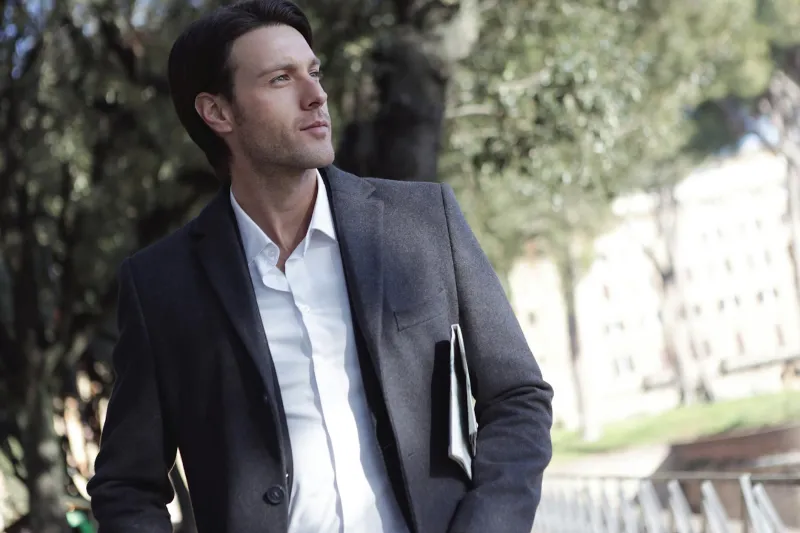
The Algorithm Made Me Do It
Somewhere in the digital depths of LinkedIn's servers, an algorithm has achieved what no fashion magazine, stylist, or government initiative ever could: it has convinced every working professional in Britain to dress exactly the same. Walk into any WeWork, networking event, or coffee shop populated by people who use phrases like 'circle back' and 'low-hanging fruit,' and you'll witness a phenomenon that would make North Korean military parades look diverse.
The uniform is rigid: navy blazer, white t-shirt or blouse, nude heels (for women) or brown brogues (for men), and the facial expression of someone who has just finished reading 'Atomic Habits' for the third time. This is the LinkedIn Look, and it has conquered Britain with the efficiency of a well-optimised sales funnel.
The Reiss Blazer Illuminati
At the heart of this sartorial conspiracy lies one garment: the Reiss navy blazer. Specifically, the £225 'Larsson' style for women and the £295 'Ceremony' for men. These blazers have achieved what fashion historians will surely classify as 'Peak Ubiquity' – the point at which a single item becomes so universally adopted that wearing it becomes both conformist and rebellious simultaneously.
Every female LinkedIn influencer owns this blazer. Every single one. They wear it whilst delivering profound insights about 'authentic leadership' and 'personal branding.' They wear it in their headshots, their speaking engagements, and their carefully curated 'day in the life' content. The blazer has become the professional equivalent of a superhero costume – put it on, and suddenly you're qualified to share motivational quotes over sunrise stock photos.
Sarah Chen, a 'Thought Leader' (according to her bio) with 47,000 followers, owns three identical Reiss blazers. "It's about removing decision fatigue," she explains, using the sort of corporate speak that LinkedIn algorithms find irresistible. "When you know what works, you stick with it."
 Photo: Sarah Chen, via cdn.tatlerasia.com
What 'works,' apparently, is looking exactly like everyone else whilst claiming to champion authenticity.
The Executive Presence Grift
Behind this sartorial standardisation lurks an entire industry of 'Executive Presence Coaches' – a job title that didn't exist twenty years ago but now commands fees of £200 per hour. These modern-day style gurus have convinced Britain's professional class that success can be purchased from Reiss, COS, and the Zara 'Tailored' section.
Jemima Worthington-Smythe runs 'Presence & Power,' a consultancy that helps professionals 'optimise their visual impact.' Her website features testimonials from women who credit their promotions to purchasing the right blazer, as if the C-suite were populated by people who make hiring decisions based on adherence to an unspoken dress code.
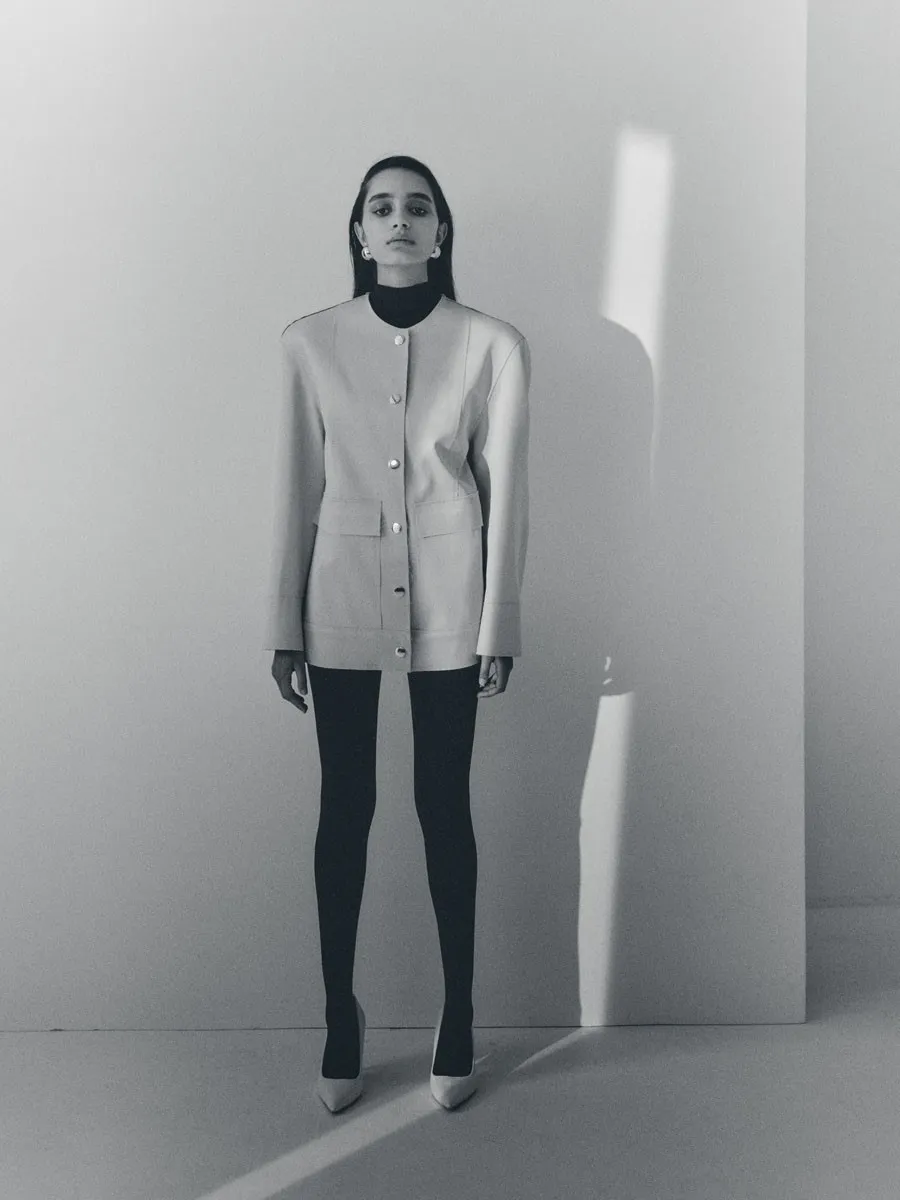 Photo: Jemima Worthington-Smythe, via modeltek.chicmanagement.com.au
"It's about signalling competence," Jemima explains, wearing – inevitably – a navy blazer over a white silk blouse. "When you dress the part, you become the part."
The 'part,' it seems, is 'person who shops at the same five stores as everyone else in their industry.'
The Capsule Wardrobe Cult
The LinkedIn fashion phenomenon has given birth to the Professional Capsule Wardrobe – a concept that promises to simplify your life whilst requiring extensive research, planning, and a budget that could fund a small holiday. These wardrobes consist of approximately twelve pieces, all in varying shades of beige, navy, and what optimistic retailers call 'camel.'
The formula is rigid: two blazers (navy and camel), three 'elevated basics' (white blouse, stripe top, cashmere jumper), two pairs of trousers (navy and grey), one 'statement' dress (navy), and accessories that whisper rather than shout. The entire ensemble should suggest competence, reliability, and the sort of person who has strong opinions about project management software.
Instagram accounts dedicated to professional capsule wardrobes have spawned a micro-influencer economy. Women with usernames like @MinimalManagerial and @CapsuleCareer share flat-lay photos of their purchases, each item tagged with affiliate links and accompanied by captions about 'intentional dressing' and 'investment pieces.'
The Great Beige Convergence
What's particularly insidious about the LinkedIn Look is how it masquerades as individual choice whilst being entirely algorithmic. The platform's culture of 'personal branding' has created a feedback loop where everyone optimises for the same aesthetic because it performs well with the algorithm, which promotes it because it performs well, ad infinitum.
The result is a professional class that has achieved perfect visual harmony whilst losing all personality. Scroll through LinkedIn, and you'll see hundreds of people who look like they were styled by the same AI – which, in a sense, they were.
The Male Equivalent
Men haven't escaped this phenomenon. The LinkedIn male uniform consists of a navy blazer (Zara or COS), white Oxford shirt (Uniqlo), chinos (J.Crew or Everlane), and brown leather shoes that suggest both approachability and fiscal responsibility. The look says, 'I understand blockchain but also enjoy craft beer.'
The male LinkedIn influencer adds a single rebellious element: rolled sleeves, suggesting he's not afraid to 'get his hands dirty' whilst disrupting whatever industry he's currently thought-leading in.
The Authenticity Paradox
The supreme irony of LinkedIn fashion is that it emerged from a platform obsessed with 'authenticity' and 'being your true self.' Yet the visual result is the most inauthentic thing imaginable: thousands of professionals cosplaying as the same character, like a corporate Comic-Con where everyone came dressed as 'Successful Person #1.'
This authenticity paradox reaches its peak in LinkedIn posts about 'showing up as your authentic self' – written by people wearing identical outfits, using identical language, sharing identical insights about the importance of being different.
The Regional Variations
Like any successful cultural phenomenon, the LinkedIn Look has developed regional variations. In Manchester, the blazer might be paired with slightly more adventurous footwear. In Edinburgh, a subtle tartan scarf adds 'heritage appeal.' In London, the entire ensemble costs 40% more but looks exactly the same.
These variations are celebrated as 'personal style' whilst being as standardised as McDonald's regional menu differences – technically distinct but fundamentally identical.
The Future of Professional Uniformity
As LinkedIn continues to shape professional culture, we can expect the visual convergence to intensify. Already, AI styling apps are being developed specifically for professional wardrobes, promising to optimise your appearance for maximum career impact.
The endgame appears to be a professional class that has achieved perfect visual efficiency: everyone dressed identically for maximum algorithmic performance, personal expression reduced to the choice between navy or charcoal blazers.
In this brave new world of professional uniformity, the most rebellious act might be showing up to a networking event in something that doesn't photograph well for LinkedIn. But given the platform's influence over career advancement, that rebellion might come at a cost few are willing to pay.
So we march forward, navy blazers gleaming, into a future where professional success is measured not by competence or creativity, but by adherence to an algorithmic aesthetic that promises everything and delivers a wardrobe indistinguishable from everyone else's.
The LinkedIn Look isn't just fashion – it's the visual manifestation of late-stage capitalism, where even our clothes are optimised for performance metrics. And frankly, that's the most authentically modern thing about it.