Britain's Home Fitting Service Delusion: The Nation That Turned Online Shopping Into Unpaid Labour
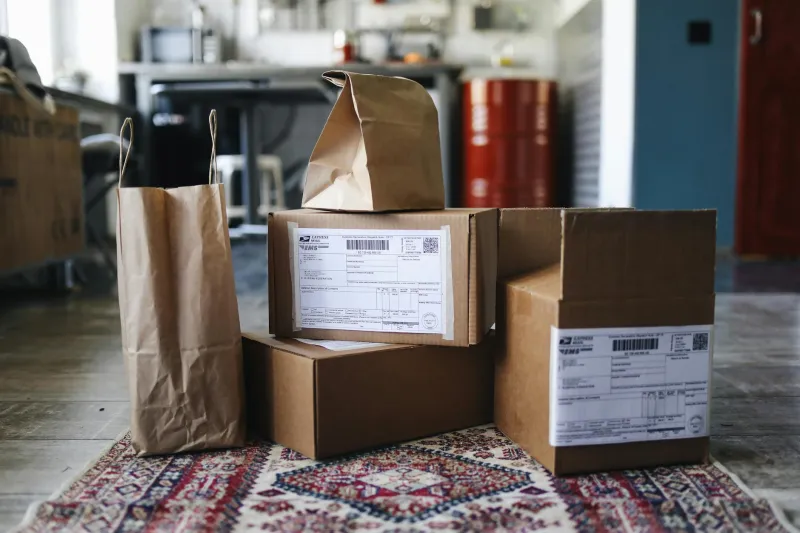
The Death of the Changing Room Queue
Britain has quietly revolutionised retail, though not in the way anyone intended. Somewhere between the rise of next-day delivery and the collective trauma of fluorescent changing room lighting, an entire nation convinced itself that the solution to clothes shopping wasn't better fitting rooms – it was turning their homes into unpaid distribution centres.
Welcome to the new British shopping experience, where 'browsing' means adding seventeen items to your basket, 'trying on' happens in your bedroom mirror, and 'buying' is actually just the beginning of a complex returns operation that would make Amazon's logistics team weep with admiration.
"I never shop in stores anymore," announces Sarah, 34, surveying a living room that currently houses four different orders from three different retailers, all in various stages of the try-on-photograph-return cycle. "This is so much more efficient."
Efficient, perhaps, if you don't count the three hours she's spent this week photographing herself in nearly identical blazers, the forty-five minutes researching return policies, or the ongoing relationship she's developed with her local Hermes delivery driver, who now knows her coffee preferences.
The Great Jiffy Bag Economy
Britain's cupboards tell the story of this retail revolution. Somewhere between the tea towels and the batteries, every household now maintains a strategic reserve of jiffy bags, return labels, and parcel tape. These aren't just storage solutions – they're the infrastructure of a new economy where British consumers have accidentally become unpaid employees of the fashion industry.
"I've got a whole system," explains Emma, 28, opening what was once a linen cupboard to reveal a carefully organised returns operation. "New arrivals go here, items I'm considering go there, and returns waiting to go back are in that basket. I've got return labels printed for the next two weeks."
She's essentially running a small business from her spare bedroom, except instead of making money, she's spending it and doing all the administrative work for free.
The Photography Studio in Your Bedroom
The modern British woman's bedroom has evolved beyond its traditional purpose. It's now a sophisticated content creation studio where the daily ritual involves ordering clothes, photographing yourself wearing them, seeking validation from friends via WhatsApp, and then methodically returning 90% of your purchases.
"I take photos in three different lights," says Jessica, demonstrating her process with the dedication of a professional photographer. "Natural light by the window, overhead light, and lamp light. Then I send them to my sister, my best friend, and sometimes my mum if I'm really unsure."
The consultation process alone takes longer than most people spend in actual changing rooms, but somehow this elaborate production has been rebranded as 'convenient shopping'.
The WhatsApp Styling Advisory Board
Every British woman now maintains an informal styling advisory board via WhatsApp, a collection of friends and family members who've been conscripted into providing free fashion consultation services. These groups operate with the efficiency of a small marketing agency, complete with rapid-fire feedback sessions and detailed analysis of fit, colour, and 'whether it makes you look washed out.'
"My group chat is basically a 24/7 styling service," laughs Claire, scrolling through seventeen photos of her trying on the same dress in different poses. "We all do it for each other. It's like having a personal shopper, except we're all the personal shoppers."
The group has developed its own sophisticated rating system, technical terminology for different types of fits, and an unspoken understanding that everyone will drop everything to provide immediate feedback on a potential purchase.
The Return Label Archaeology
Modern British homes contain layers of return-related archaeology. Dig through any handbag and you'll find crumpled return labels from orders placed months ago. Check any kitchen counter and there's probably a pile of items waiting to go back. The hallway likely contains at least three packages in various stages of the returns process.
"I found a return label from ASOS in my coat pocket from last winter," admits Rachel, 31. "The dress it was for is probably still in my wardrobe somewhere. I think I forgot to send it back and then convinced myself I liked it."
This accidental retention strategy has become an unofficial business model. Items that survive the returns process through sheer administrative oversight are deemed 'meant to be' and integrated into wardrobes through a process that's part fate, part laziness.
The Delivery Driver Relationship Economy
Britain's delivery drivers have inadvertently become integral parts of the nation's social fabric. Regular customers develop relationships with their drivers that border on therapeutic. These daily interactions – receiving packages, handing over returns, discussing the weather – have replaced the casual social contact that once happened in shops.
"Dave knows my shopping patterns better than my husband does," says Helen, waving at her regular Hermes driver. "He can tell when I've had a bad week because suddenly there are five packages instead of two."
Dave, for his part, has developed an unofficial counselling service, providing gentle feedback on delivery frequency and occasionally expressing concern when someone's ordering patterns suggest they might be going through something.
The Cognitive Dissonance of 'Smart Shopping'
The most remarkable aspect of Britain's home fitting service revolution is how successfully the nation has reframed this elaborate, time-consuming process as superior to traditional shopping. Women who spend hours each week managing their personal returns operation genuinely believe they've discovered a more efficient way to shop.
"I'm so much smarter about my purchases now," insists Kate, surrounded by evidence to the contrary in the form of seven packages from the past fortnight. "I never buy anything without trying it properly first."
The fact that 'trying it properly' now involves a complex production process, multiple consultation sessions, and a returns operation that would challenge a small logistics company has somehow been lost in the narrative of consumer empowerment.
The Environmental Elephant in the Room
Buried beneath all this convenience is a growing awareness that turning the entire country into a network of mini distribution centres might not be the most sustainable approach to fashion consumption. But this realisation tends to surface only briefly, usually while standing in the post office queue with an armful of returns, before being quickly suppressed in favour of the convenience narrative.
"I try not to think about all the packaging and transport," says Lucy, contemplating a pile of returned items. "But it's not really my fault, is it? The shops made it this easy. I'm just using the service they provide."
And there lies the beautiful British logic that has turned an entire nation into unpaid retail workers while convincing them they're the beneficiaries of progress. The changing room queue is dead – long live the Jiffy bag mountain.