The Great Serotonin Shopping Scam: How Britain Convinced Itself That Neon Jackets Are Medicine
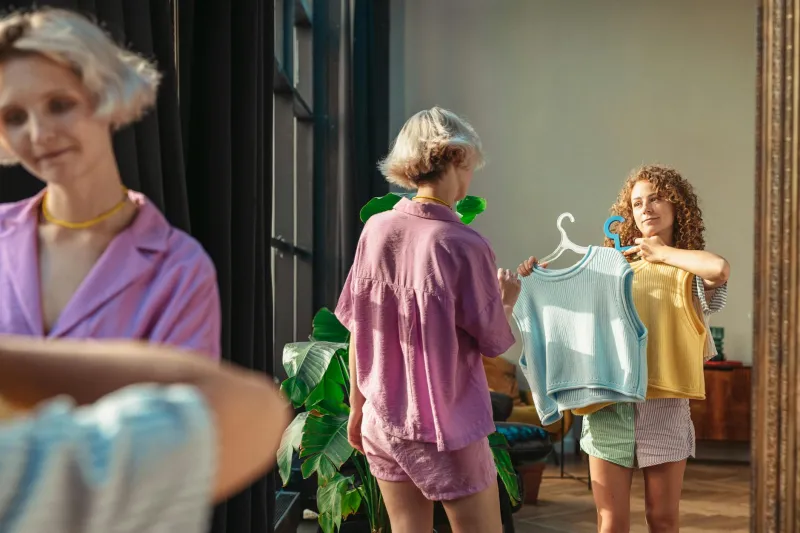
The Pharmaceutical Fashion Revolution
Somewhere between the third lockdown and the realisation that life might actually be quite grim, Britain discovered dopamine dressing. Suddenly, every garish impulse purchase became a prescription for joy, every questionable colour choice transformed into a medically-endorsed mood booster, and every regrettable shopping spree reframed as essential mental health maintenance.
The concept is beautifully simple: wear bright colours, feel happy. Science, apparently. Never mind that this "science" seems to have been conducted exclusively by marketing departments and lifestyle bloggers with suspiciously perfect teeth. The British public, desperate for any excuse to feel better about their deteriorating bank balances and overflowing wardrobes, embraced dopamine dressing with the fervour of medieval pilgrims discovering a new saint.
The ASOS Apothecary
Walk into any British high street store today, and you'll find yourself in what appears to be a pharmaceutical trial gone horribly wrong. Neon yellow puffer jackets hang next to electric blue blazers, whilst hot pink trousers share rail space with lime green jumpers that could probably be seen from space.
The sales assistants have been trained in the new vocabulary. That £89 orange coat isn't just orange—it's a "mood-boosting investment piece designed to elevate your serotonin levels naturally." The shocking pink dress isn't garish—it's "dopamine-optimised fashion therapy." Even the fluorescent yellow trainers come with a warning label: "May cause excessive happiness and compliments from strangers."
Customers have adapted accordingly. Shopping trips are now "self-care sessions." Buying a lime green handbag becomes "investing in my mental health." The phrase "retail therapy" has been upgraded to "chromotherapy shopping experience," because if you're going to bankrupt yourself, you might as well do it with scientific legitimacy.
Dr. Sarah Mitchell's Surgery Nightmare
Dr. Sarah Mitchell, a GP in Birmingham, has witnessed the dopamine dressing phenomenon from the front lines of British healthcare. Her waiting room, she reports, now resembles "a highlighter pen explosion" as patients arrive in increasingly vibrant outfits, armed with screenshots from Instagram and a firm belief that their wardrobe choices constitute medical treatment.
"I've had patients come in wearing head-to-toe neon claiming their outfit is 'prescribed by TikTok,'" Dr. Mitchell sighs. "Last week, a woman asked me to write a sick note because her employer complained about her 'therapeutically bright' wardrobe. She genuinely believed that wearing a different fluorescent colour each day was treating her seasonal affective disorder."
The requests have become increasingly creative. Patients want their shopping receipts classified as medical expenses. One woman asked if her dopamine dressing regimen qualified her for disability benefits. Another requested a referral to a "colour therapy specialist" after discovering that her electric blue coat hadn't immediately cured her divorce-related depression.
"I spend more time explaining that buying a neon jacket isn't a substitute for actual therapy than I do treating actual medical conditions," Dr. Mitchell admits. "The NHS is stretched enough without having to deal with people who think Zara is a pharmaceutical company."
The Instagram Pharmacists
The dopamine dressing trend has created an entire ecosystem of unqualified mental health advisors, all wielding Ring Lights and affiliate links. These "wellness influencers" dispense fashion-based medical advice with the confidence of people who've never seen the inside of a medical textbook but have definitely read several Wikipedia articles about neurotransmitters.
@BrightVibesOnly (127K followers) posts daily outfit grids accompanied by pseudo-scientific explanations: "This yellow blazer literally increases your dopamine production by 43%! Science! Swipe up to shop my mood-boosting wardrobe essentials!" The "science" in question appears to be a single study conducted on twelve university students in 2019, but why let facts interfere with a perfectly good marketing strategy?
The comment sections are a masterclass in collective delusion. "OMG yes! I bought this exact top and my depression was cured by lunchtime!" writes one follower. "Doctors hate this one simple trick—wearing pink jumpers!" adds another, apparently unaware that doctors hate this trick primarily because it's not actually a trick at all.
The Colour-Coded Crisis
The dopamine dressing industrial complex has created its own mythology, complete with a detailed colour-coding system that would make a hospital triage unit weep with envy. Yellow, apparently, boosts creativity and energy. Pink enhances self-love and compassion. Orange stimulates enthusiasm and confidence. Red increases passion and motivation.
The only problem? None of this is remotely based in scientific reality. Colour psychology, whilst a legitimate field of study, doesn't work like a vending machine where you insert a bright jumper and receive instant happiness. The human brain is slightly more complex than a mood ring.
"The idea that wearing specific colours can reliably alter your neurochemistry is about as scientific as horoscopes," explains Dr. James Peterson, a clinical psychologist. "Yes, colours can influence mood to some degree, but claiming that a neon jacket is equivalent to antidepressants is dangerous nonsense."
The Fast Fashion Pharmacy
Perhaps the most cynical aspect of the dopamine dressing trend is how perfectly it aligns with fast fashion's business model. Suddenly, buying multiple bright items isn't consumption—it's medication. That weekly ASOS order isn't shopping addiction—it's maintaining your mental health prescription.
Fast fashion retailers have embraced the trend with the enthusiasm of pharmaceutical companies discovering a new wonder drug. Every season brings fresh "mood-boosting collections" and "happiness-inducing colour palettes." The environmental cost of producing millions of synthetic garments in eye-watering colours? That's someone else's problem. Right now, there are serotonin levels to optimise and dopamine receptors to stimulate, apparently.
The Uncomfortable Truth About Joy
The real tragedy of dopamine dressing isn't that people are wearing bright colours—it's that we've become so disconnected from genuine sources of happiness that we're willing to believe a shopping trip can fix our brain chemistry. The trend reflects a deeper malaise: a society so starved of authentic joy that we'll grasp at any colourful straw, no matter how expensive or environmentally destructive.
Real mental health treatment involves therapy, medication when appropriate, lifestyle changes, and often years of hard work. It doesn't involve a £79 lime green blazer from Zara, no matter how many Instagram posts claim otherwise.
The Prescription for Reality
By all means, wear bright colours if they make you happy. Life is short, and there's nothing wrong with a bit of sartorial joy. But let's stop pretending that shopping is medicine, that influencers are doctors, and that your wardrobe is a pharmacy.
If you're genuinely struggling with mental health issues, please see an actual medical professional. If you're just looking for an excuse to buy that ridiculous orange coat you've been eyeing, that's fine too—but call it what it is: shopping. Not therapy, not medicine, not a dopamine prescription.
Just shopping. And sometimes, that's enough.
The neon yellow puffer jacket, sadly, remains just a neon yellow puffer jacket. No matter what TikTok might claim.