The Quilted Menace: How Britain Surrendered Its Identity to the Great Puffer Overlords
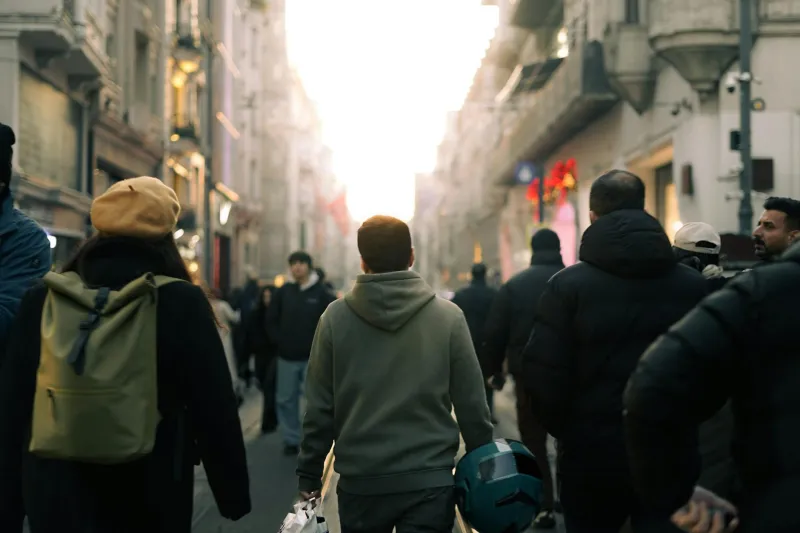
The Silent Invasion Begins
Sometime around 2019, whilst we were all distracted by Brexit and wondering whether Boris Johnson's hair was a sentient being, Britain experienced a quiet revolution. Not the kind involving guillotines or strongly-worded petitions, but something far more insidious: the complete capitulation of our national dress code to the tyranny of the puffer jacket.
Walk down any high street from Hexham to Hastings today, and you'll witness a phenomenon so complete it makes the Roman conquest look like a weekend minibreak. We have become a nation of walking duvets, indistinguishable from one another save for the occasional flash of trainer brand loyalty beneath our quilted hemlines.
The Anatomy of Surrender
The genius of the puffer jacket's takeover lies not in its subtlety—there's nothing subtle about looking like an ambulatory airbag—but in its democratic appeal. Whether you're dropping little Tarquin at his Montessori academy or presenting quarterly figures to the board, the puffer jacket whispers seductively: 'Why choose between comfort and looking like you've given up on life when you can have both?'
The longline variation deserves particular scrutiny. This garment, which transforms its wearer into what can only be described as a walking sleeping bag with delusions of grandeur, has somehow convinced British women that resembling an insulated sausage is the height of urban sophistication. The longline puffer doesn't just keep you warm—it announces to the world that you've reached a level of existential acceptance where looking like emergency shelter equipment is preferable to the complex negotiations required by actual fashion.
The Great Equaliser
Perhaps most remarkably, the puffer jacket has achieved what centuries of social reform could not: true equality. In a puffer jacket, a Deliveroo rider becomes indistinguishable from a hedge fund manager. Both are equally likely to be mistaken for someone who's recently escaped from a very comfortable psychiatric facility that specialises in outdoor activities.
This sartorial socialism has created fascinating new social dynamics. The traditional British class system, once easily navigated by observing the quality of one's overcoat, has been replaced by a complex algorithm involving puffer jacket colour (black for serious professionals, navy for school run mums, neon for those who've completely given up), brand visibility (subtle logo for the aspirational middle class, no logo for the truly wealthy, massive logo for everyone else), and most crucially, the degree of puffiness (the more inflated, the more one has surrendered to the inevitable).
The Psychology of Puff
The puffer jacket's success stems from its ability to solve multiple British anxieties simultaneously. Cold? Sorted. Unsure what to wear? Puffer. Feeling vulnerable in the harsh urban landscape? Nothing says 'I am prepared for anything' like wearing what is essentially a portable tent.
But there's something more profound at work here. The puffer jacket represents the ultimate British compromise: practical enough to justify, shapeless enough to hide any evidence of what we had for lunch, and sufficiently ubiquitous to ensure we never stand out from the crowd. It's the sartorial equivalent of apologising before speaking.
The Corporate Conspiracy
Every major retailer has embraced the puffer revolution with the enthusiasm of arms dealers during wartime. From Uniqlo's 'ultra light down' (for those who want to look puffy but maintain some dignity) to Zara's designer interpretations (for those who want to look puffy but spend three times as much for the privilege), the message is clear: resistance is futile.
Even luxury brands have surrendered. When Moncler can charge £800 for what is essentially a very fancy sleeping bag, you know civilisation has reached a tipping point. These aren't jackets anymore—they're lifestyle choices, identity markers, and possibly the closest thing to wearable architecture we'll achieve without actually strapping buildings to our torsos.
The Future Is Puffed
As we enter another winter of our discontent—with energy bills, housing costs, and the general state of everything—the puffer jacket stands ready to embrace us all in its quilted arms. It doesn't judge. It doesn't discriminate. It simply puffs.
Perhaps this is what evolution looks like in the 21st century: not opposable thumbs or larger brains, but the collective decision to dress like we're perpetually prepared for an expedition to Base Camp Everest, even if our most adventurous journey is to the local Waitrose.
The puffer jacket hasn't just conquered British fashion—it's become our national costume, our armour against both the elements and the complex demands of modern life. We are all puffed now, floating through our days like a nation of very stylish emergency flotation devices.
And honestly? We've never been warmer.