Smart Casual: Britain's Most Violent Two-Word Phrase Explained

Photo: Mike8411251995, Public domain, via Wikimedia Commons
Smart Casual: Britain's Most Violent Two-Word Phrase Explained
There is a moment, familiar to approximately 67 million British people, that occurs roughly forty minutes before leaving the house. You are standing in front of a wardrobe. The invitation — to a wedding, a works do, a restaurant that has a policy — says 'smart casual.' You have been staring at it for the better part of half an hour. You are no closer to understanding what it means. You are, in fact, further away than when you started.
This is not a personal failing. This is a national emergency.
The Phrase That Launched a Thousand Crises
Linguists — actual ones, not just people who've read a lot of Guardian lifestyle supplements — will tell you that a phrase only functions as communication if both parties agree on its meaning. 'Smart casual' fails this test catastrophically. In any given room of twelve people asked to define it, you will receive twelve distinct answers, at least three of which will be mutually exclusive, and one of which will involve a man insisting that a clean polo shirt 'absolutely counts.'
The phrase entered the British cultural vocabulary sometime in the 1990s, deployed initially by hotels and mid-range restaurant chains who wanted to keep out people in football shirts without actually committing to the social violence of a proper dress code. The intention was benign. The consequences have been catastrophic.
Because here is the thing about removing a clear rule: you do not create freedom. You create a void. And into that void, Britain has poured thirty years of anxiety, passive aggression, and one truly extraordinary spectrum of interpretations that now ranges — verifiably, in documented real-world conditions — from a three-piece tweed suit to paint-stained chinos and a fleece.
The Forensic Evidence
Let us examine what 'smart casual' actually produces in the wild. At a recent leaving do at a mid-market Italian restaurant in Manchester, attendees arrived in: a blazer over jeans (classic, respectable, the intended reading), a full suit with tie (over-committed, slightly threatening), a linen shirt untucked over smart trousers (aspirational), dark jeans and a nice jumper (sensible, British, correct), a hoodie (bold), and — and this is real — a man in what appeared to be golf trousers and a rugby shirt who announced he had 'made an effort' because the shirt had a collar.
The collar defence. Britain's most beloved sartorial loophole. The collar has become the nation's get-out-of-jail-free card, the single garment feature that apparently transforms any outfit from 'dressed by a labrador' to 'ready for polite society.' A collar, in the British imagination, is civilisation. Everything above the collar is respectable. Everything below it is apparently optional.
Who Killed the Dress Code?
The death of the clear dress code did not happen overnight. It was a slow assassination, carried out by several culprits operating in loose but devastating coordination.
First, the tech industry. When Silicon Valley decided that billionaires in grey T-shirts were aspirational, the British office followed with the enthusiasm of a labrador chasing a tennis ball. 'Dress for the job you want' became 'dress like you don't need a job because you're disrupting something.' Ties became objects of ridicule. Suits became suspect. The collar — there it is again — became optional even in environments where people were, technically, handling other people's money.
 Photo: Silicon Valley, via 1.bp.blogspot.com
Second, the rise of the 'experience economy' restaurant, which decided that the ambience of exposed brick and a seventeen-quid cocktail could do the heavy lifting previously performed by a dress code. If you're paying this much for a Negroni, the thinking went, you've presumably dressed accordingly. Reader, they had not.
Third, and most devastatingly: the pandemic. Two years of working from home completed the demolition job with the efficiency of a controlled explosion. An entire professional class discovered that human dignity was compatible with elasticated waistbands, and they are not giving that up. Not for a restaurant. Not for a wedding. Possibly not for a court appearance.
The Wedding Industrial Catastrophe
Nowhere does 'smart casual' cause more psychological damage than on a wedding invitation. This is a document people have spent months crafting, and they have chosen — voluntarily, with full knowledge of the consequences — to write 'smart casual' in the dress code box rather than commit to anything specific.
What follows is a WhatsApp thread of approximately 340 messages spanning three weeks, in which the hen party attempts to collectively define what the bride means, whether 'smart' is doing more work than 'casual' or vice versa, whether a jumpsuit counts, whether a maxi dress is too casual, whether a blazer makes jeans acceptable, and whether anyone has asked the groom's mother what she's wearing because she'll know.
The groom's mother, for the record, is wearing a hat. Nobody asked for that information but here we are.
A Proposed Solution Nobody Will Adopt
The solution is obvious and will never happen: bring back specific dress codes. Not the draconian Victorian variety — nobody is demanding morning dress at a Pizza Express. Simply: say what you mean. 'Wear a dress or trousers, nothing sportswear.' Done. Civilisation preserved. Thirty-seven minutes of wardrobe paralysis avoided.
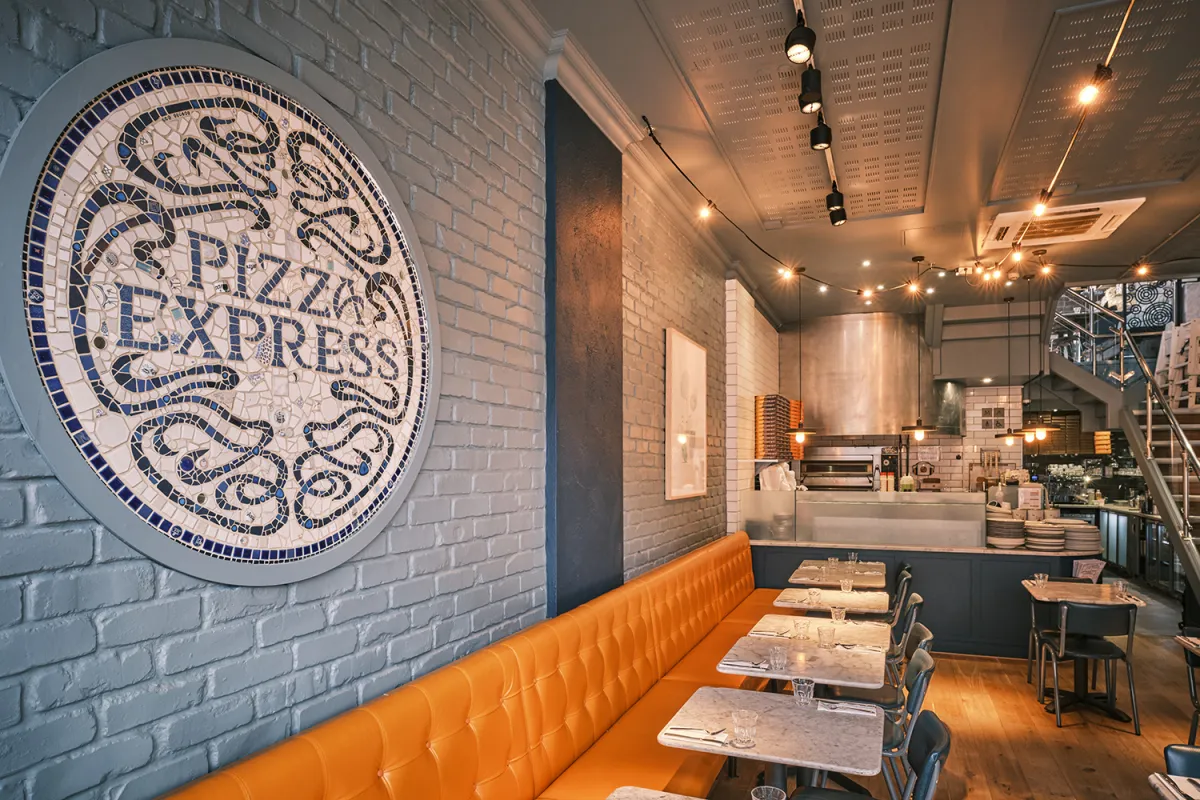 Photo: Pizza Express, via www.pizzaexpress.com
But Britain will not do this because Britain has confused vagueness with politeness and specificity with aggression. To tell someone precisely what to wear would be rude. Better to let them stand outside your venue in a cold sweat, texting their partner 'do you think this is too much?' while a man in golf trousers sails past them with a collar and absolutely no shame.
The collar. Always the collar.
The Verdict
'Smart casual' is not a dress code. It is a trust exercise that Britain has been failing for thirty years. It is two words doing the work of zero words. It is the linguistic equivalent of saying 'anywhere's fine for dinner' and then vetoing every suggestion.
Until the nation agrees — formally, perhaps via referendum, which at this point seems proportionate — on a shared definition, we will continue to produce rooms full of people in wildly incompatible outfits, all of whom believe they have interpreted the brief correctly and all of whom are privately judging everyone else.
Which is, when you think about it, extremely on brand for Britain.
Wear the blazer. You'll be fine. Probably.