Polyester Patriots: How British Schools Turned Three Grey Shirts Into a Mandatory Luxury Brand Experience
There is a warehouse on a retail park outside Wolverhampton. It is not glamorous. It smells of sizing agent and quiet desperation. And yet, every August, thousands of British parents make a solemn pilgrimage to its fluorescent-lit interior, credit cards trembling, to purchase the specific shade of navy that their child's school has decided — this year, crucially — is different from all other navy.
Welcome to the British School Uniform Industrial Complex. Population: every parent who has ever stood in a car park, squinting at two near-identical sweatshirts, wondering why one costs £8.50 and the other costs £26.99, and why only the second one is permitted within fifty metres of their child's school.
The Sacred Branded Crest and What It Actually Costs You
Let us examine the mathematics. A plain grey polo shirt from Asda costs £3.50. The identical polo shirt — same fabric weight, same cut, same approximate relationship to comfort — costs £11.99 once it has been blessed with the school crest: a small embroidered shield featuring what appears to be either a lion rampant or a very aggressive badger. Nobody is entirely certain.
Your child needs five of these shirts. They will lose two by the third week of September. The remaining three will be discovered in February behind a radiator, having achieved a structural independence that scientists have not yet fully explained.
Add to this: the regulation trousers (available exclusively from the approved outfitter, because Tesco's version, while visually identical, contains 'an insufficient twill weave' according to a letter sent home in July), the embroidered jumper, the PE kit — which is a separate embroidered situation entirely — the book bag, the swimming bag, and, at certain schools in the home counties, what can only be described as a branded umbrella, and you are looking at somewhere between £200 and £400 before your child has attended a single lesson.
The Criminalisation of the Wrong Black
Nothing in the British school uniform experience has generated more quiet parental anguish than the official position on black trousers. Specifically: that not all black is the same black.
Schools across the country have developed an almost theological position on trouser darkness. There is Approved Black, which is available from the outfitter and costs £24. There is Supermarket Black, which is visually indistinguishable from Approved Black but carries with it the spiritual contamination of having been purchased somewhere convenient. And there is — whisper it — Slightly Faded Black, which is what happens to Approved Black by November and which, paradoxically, is no longer acceptable despite having started life as the correct item.
Parents have reported receiving letters home describing their child's trousers as 'not in keeping with the school's presentation standards'. One mother in Hertfordshire reportedly held her son's Approved Black trousers next to the letter, then next to a fresh pair, then next to a photograph of the previous year's trousers, in an attempt to identify the precise moment her £24 investment became contraband. She is still looking.
The Approved Outfitter: A Retail Experience Designed by Someone Who Has Never Enjoyed Anything
The approved outfitter is, as a rule, located somewhere that requires either a forty-minute drive or a bus journey involving two changes and a mild sense of existential threat. It opens at 9am on weekdays and, during the August rush, operates a queuing system that a major theme park would find excessive.
Inside, the experience is best described as controlled chaos administered by two members of staff who are doing their absolute best and deserve a significant pay rise. There are no changing rooms in any functional sense. There is a mirror. There is a communal space in which twelve children are simultaneously trying on the same jumper while their parents clutch numbered tickets and stare at a measuring chart that appears to have been designed to make everyone feel wrong.
The sizing, naturally, corresponds to no known human body. The age-seven shirt fits the average age-nine child. The age-nine shirt fits nobody. The age-eleven shirt has sleeves that suggest the school expects its pupils to be significantly longer in the arm than current evolutionary data supports.
'Smart Appearance Promotes Learning': The Statement That Started a Racket
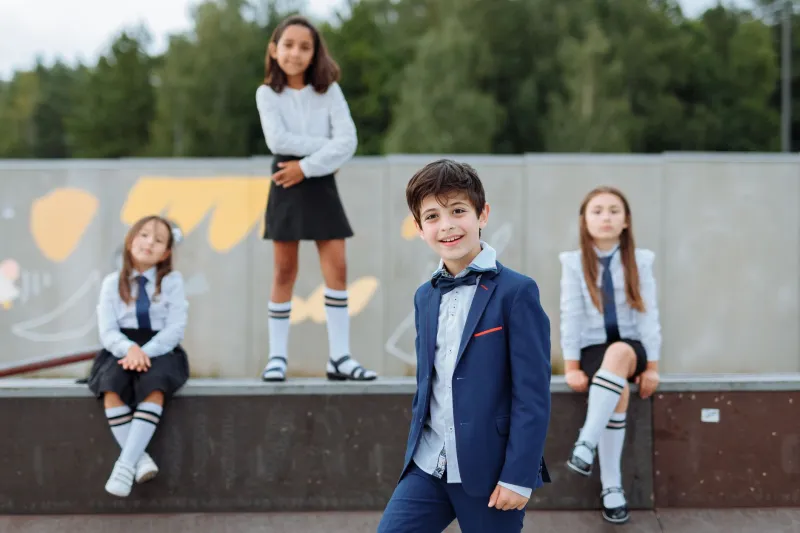
The philosophical cornerstone of the entire enterprise is the school prospectus assertion that 'a smart, consistent appearance promotes a focused learning environment and instils a sense of pride and community.' This is printed, without irony, next to a photograph of children who appear to be wearing the uniform with the vacant compliance of people on a long-haul flight.
That the 'focused learning environment' requires a specific shade of grey, a logo that costs £8 to embroider, and a PE bag that must not, under any circumstances, be the drawstring variety from Sports Direct — these are details the prospectus does not linger on.
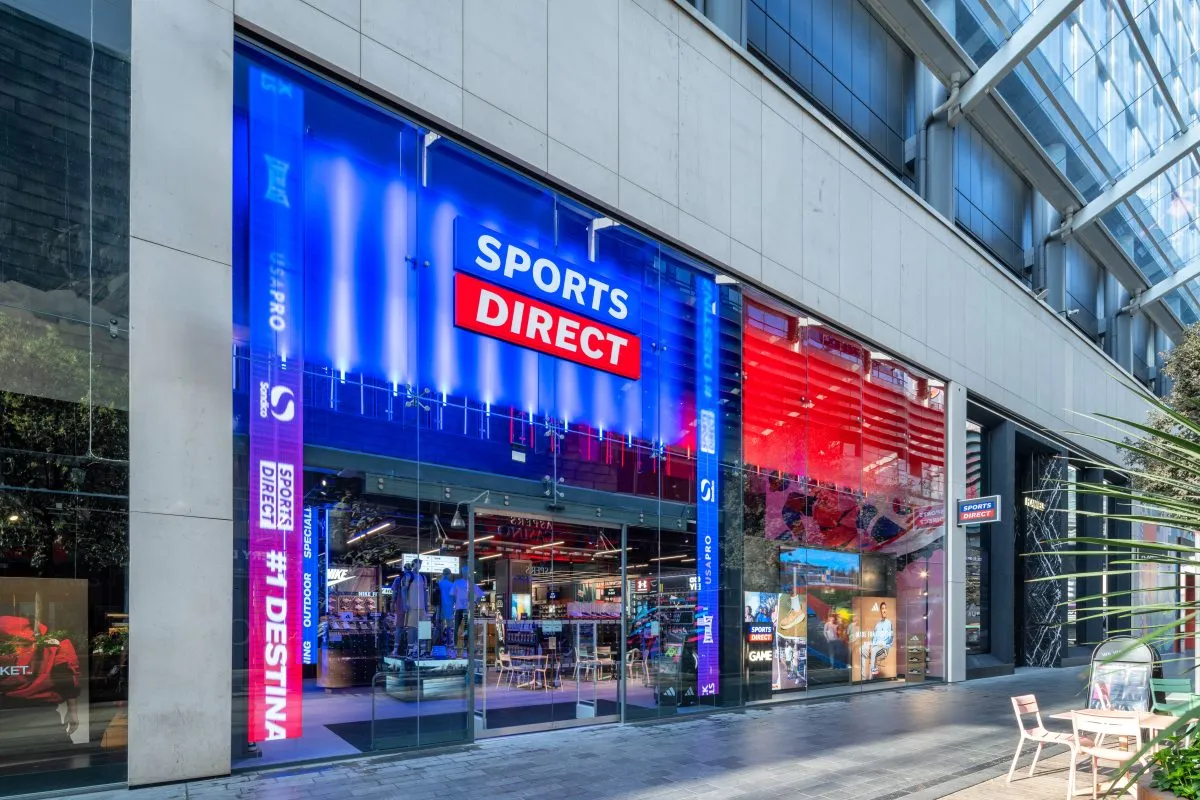 Photo: Sports Direct, via www.retailgazette.co.uk
What the prospectus also omits: that by the end of Year 7, your child will have lost, destroyed, outgrown, or simply rejected three full sets of the regulation kit; that the lost property box at the average secondary school contains enough embroidered navy to clothe a small nation; and that the jumper your child is currently wearing may, technically, belong to someone who left in 2021.
The Secondary Market: Where Uniform Goes to Be Pretended About
In a development that proves the British capacity for grassroots resistance, a thriving secondary market in second-hand uniform has emerged in every school catchment area in the country. Facebook groups with names like 'St. Whoever's Uniform Swap & Sell (NO DRAMA)' operate as shadow economies, trading slightly bobbled sweatshirts and once-worn PE shorts with the hushed efficiency of a Cold War intelligence exchange.
These groups are moderated with an iron fist by a parent called Karen or Deborah who has been doing this since 2016 and will not tolerate posts about 'wrong year groups' or, God help you, asking whether the Primark version passes muster. It does not. It never does. And yet we keep asking.
The approved outfitter, for its part, is aware of the secondary market and has responded by making each year's crest subtly different, ensuring that last year's jumper is identifiable as last year's jumper by anyone paying attention. Someone is paying attention. It is, invariably, another child.
The Inevitable Conclusion
Britain's school uniform policy began as a genuinely egalitarian idea: if everyone wears the same thing, nobody gets bullied for their clothes. This is a noble aim. It is also, at current prices, an aim that requires a roughly equal financial sacrifice from all families — which is to say, it is significantly less equal than it appears.
The uniform, as it currently exists, is not a social leveller. It is a brand. It has a logo, an approved supplier, a captive market, and a renewal cycle engineered by the twin forces of growth spurts and institutional laundry. It costs what it costs because it has been allowed to cost that much, and every September, without fail, we pay it.
The badger on the crest watches us go. He has seen this before. He will see it again. He is, if anything, slightly smug about the whole thing.