The Alchemy of Tat: How Britain Transforms Charity Shop Rejects into 'Curated Vintage Treasures'
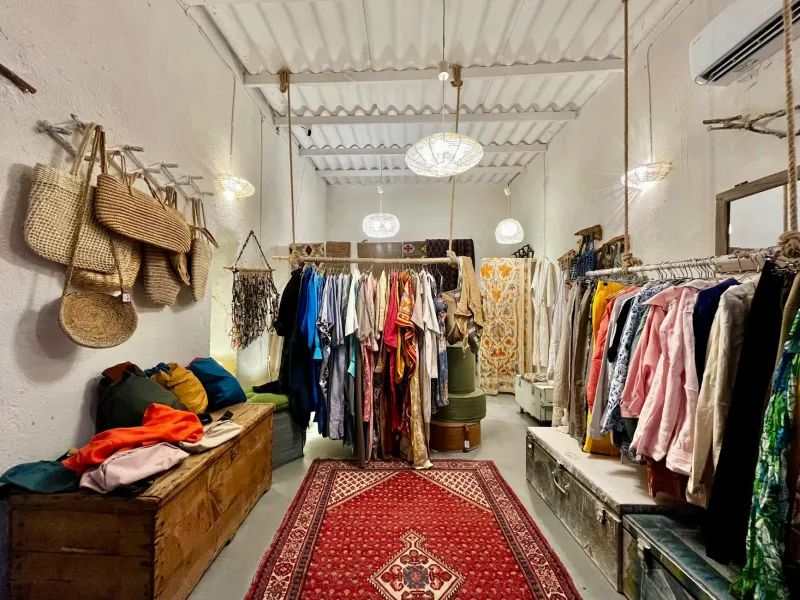
The Great Transformation
There exists a magical portal somewhere between the charity shop rail and the Instagram story, where ordinary cast-offs undergo a miraculous metamorphosis. A 1990s Marks & Spencer blouse, donated by someone's recently deceased aunt, emerges as a "curated vintage treasure" with its own origin myth and a price tag that would make its original owner spin in her grave.
 Photo: Marks & Spencer, via www.newick.org.uk
This alchemical process has created an entire economy built on the fundamental principle that everything old is new again, provided you photograph it correctly and deploy enough adjectives. The vintage industry has essentially become a very expensive game of dress-up with dead people's wardrobes, and we're all pretending it's archaeology.
The Vocabulary of Transformation
The magic happens in the language. A jumper stops being "second-hand" the moment someone calls it "pre-loved." A skirt ceases to be "old" when it becomes "vintage." Most powerfully, clothes transcend their humble charity shop origins entirely when they're described as "curated"—a word that suggests some sort of scholarly selection process rather than someone rummaging through bin bags in a church hall.
This linguistic alchemy has created a hierarchy of second-hand goods that would make the class system weep with pride. At the bottom: charity shops, where clothes are "donated" and "affordable." In the middle: vintage boutiques, where the same clothes are "sourced" and "authentic." At the top: curated vintage platforms, where identical garments are "rare finds" with "provenance" and price tags that reflect their newly minted cultural significance.
The Instagram Effect
Social media has turbocharged this transformation process. A £3 charity shop find doesn't become a £50 vintage piece through any inherent change in quality or rarity—it achieves this status through strategic photography and hashtag deployment. The right lighting can transform polyester into silk, mass production into craftsmanship, and someone's old work clothes into a "statement piece."
The formula is remarkably consistent: flat lay photography, natural lighting, strategic styling, and a caption that reads like a museum placard. "This incredible 1980s blazer features authentic power shoulder detailing and shows beautiful signs of lived-in character." Translation: "This old jacket has shoulder pads and visible wear."
The Mythology Machine
Every vintage piece needs an origin story, and the industry has become remarkably creative at manufacturing them. That anonymous blouse from a Wolverhampton charity shop becomes "a rare find from a private estate sale." The polyester dress with a Primark label carefully removed transforms into "an authentic piece from the era when fashion was made to last."
This mythologising process is essential because it justifies the markup. You're not paying £60 for a used dress; you're investing in "a piece of fashion history" with "authentic vintage character." The higher the price, the more elaborate the backstory becomes. Premium vintage pieces don't just have provenance—they have entire fictional biographies.
The Dealers in Dreams
The vintage industry has created a new class of entrepreneur: the professional rummager. These aren't shopkeepers; they're "curators" and "vintage specialists" who have turned the ability to spot potential in other people's discards into a legitimate business model. They're essentially middlemen with very good taste and excellent Instagram accounts, standing between you and a charity shop with a 400% markup and a compelling narrative.
These modern-day treasure hunters have developed an impressive ability to see past the present reality of their finds. That faded, slightly musty blazer isn't damaged goods—it's "beautifully aged with authentic patina." The fact that it smells faintly of someone else's life isn't a drawback—it's "character."
The Psychology of Pre-Loved
There's something deeply satisfying about this process that goes beyond mere shopping. Buying vintage allows us to feel simultaneously environmentally conscious, culturally sophisticated, and economically savvy. We're not just purchasing clothes; we're rescuing fashion history, supporting sustainable practices, and demonstrating our superior taste by recognising quality that others have overlooked.
This psychological dimension explains why we're willing to pay premium prices for second-hand goods. The markup isn't just for the item—it's for the story, the curation, the validation that our purchase is meaningful rather than merely materialistic. We're not buying someone's old clothes; we're investing in narrative and identity.
The Circular Economy of Aspiration
The vintage market has created a fascinating feedback loop. As more people discover the joy of transforming charity shop finds into "curated collections," the actual charity shops are being stripped of anything remotely interesting. This has led to the emergence of "vintage warehouses" and "curated pre-loved platforms" that are essentially charity shops with better branding and higher prices.
Meanwhile, the clothes we're buying today will, in twenty years' time, become tomorrow's vintage treasures. That Zara top you bought last week will eventually find its way into a charity shop, where it will be discovered by a future vintage curator who will photograph it beautifully and sell it as "authentic early 2020s fast fashion with historical significance."
The Ultimate Irony
The greatest joke in all of this is that we've created an industry dedicated to making old clothes expensive again. We've taken the democratic accessibility of charity shopping—where anyone could afford to dress well—and gentrified it into an exclusive marketplace where the same clothes cost ten times more because someone with good lighting and a compelling Instagram account has blessed them with cultural significance.
But perhaps that's the point. In an era of fast fashion and disposable culture, there's something genuinely appealing about clothes with history, even if that history has been somewhat embellished. We may be paying premium prices for other people's cast-offs, but at least they're other people's cast-offs with a really good story.