The Leather Whisperer of Guildford: How a Man in a Shed Became Britain's Most Sought-After Handbag Therapist
The Leather Whisperer of Guildford: How a Man in a Shed Became Britain's Most Sought-After Handbag Therapist
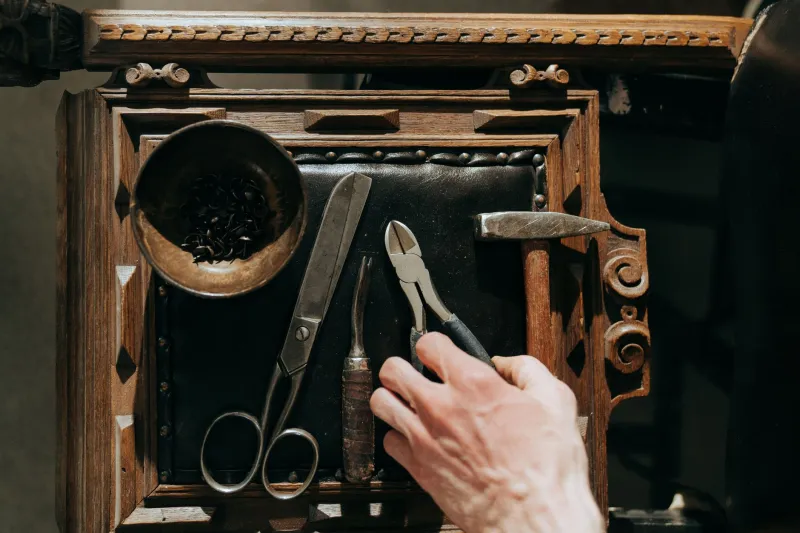
Darren does not like to be called a cobbler. He is, he explains, a 'leather restoration specialist and bag wellness practitioner'. He works from a converted outbuilding at the bottom of his garden in Guildford, which he refers to on his website as 'The Atelier'. The Atelier contains a workbench, several grades of leather conditioner, a heat gun, a ring light for the before-and-after photography, and a waiting list that currently stretches to eleven weeks.
Darren is booked until March. Darren is, in the parlance of the industry he has largely invented, thriving.
The Diagnosis: Your Bag Has Been Through Something
The consultation begins, as all good medical encounters do, with a thorough assessment. You do not simply drop your Mulberry Bayswater on Darren's workbench and say 'the handle's a bit scuffed'. That would be like walking into a Harley Street clinic and saying 'my knee hurts'. There is process. There is vocabulary. There is, crucially, a detailed intake form.
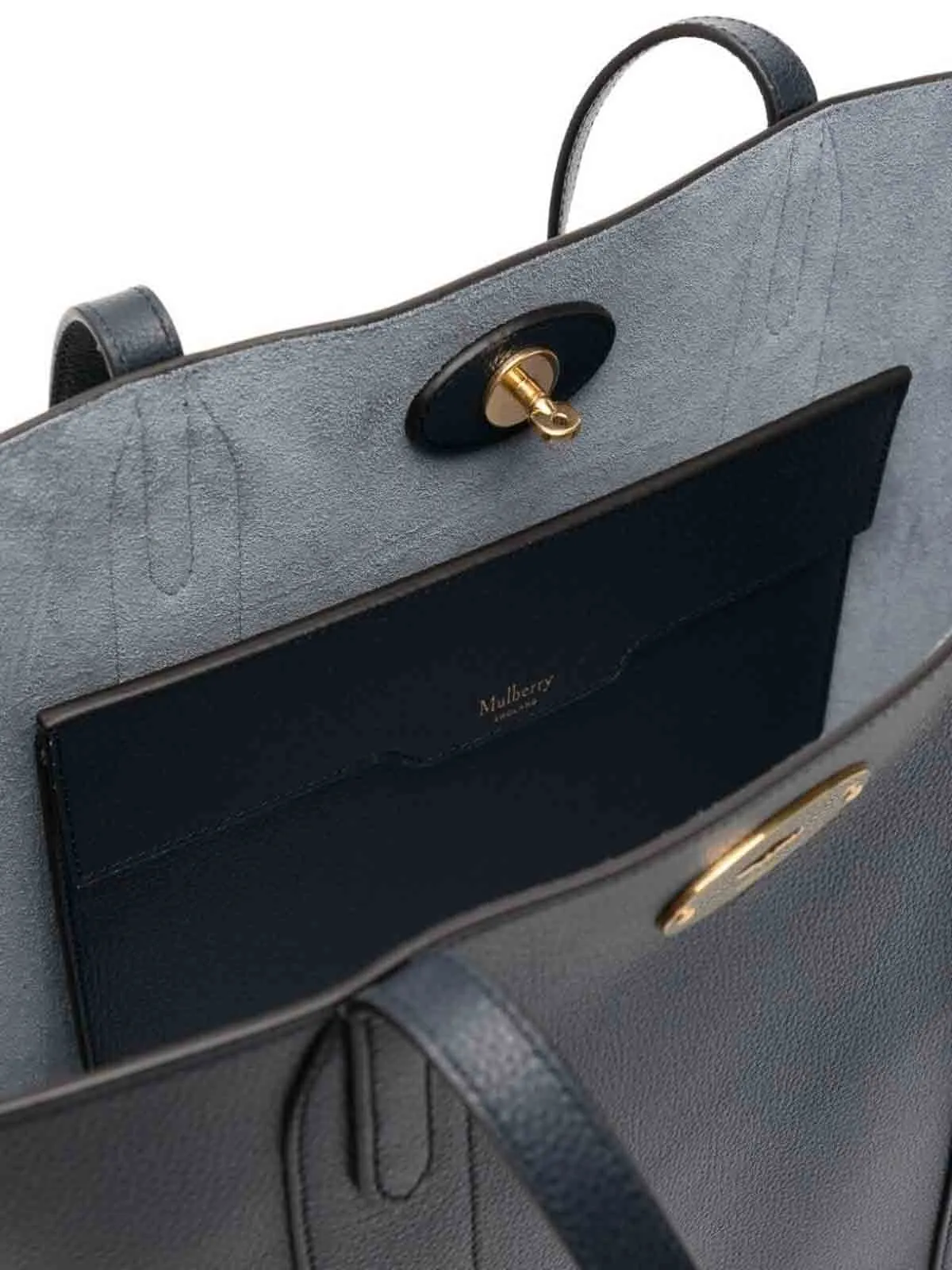 Photo: Mulberry Bayswater, via images.thebestshops.com
The form — available on Darren's website, which is elegant and uses the word 'bespoke' four times on the landing page alone — asks you to describe your bag's 'history', 'typical usage environment', and 'current emotional presentation'. This last category is not, it turns out, a joke. Bags, in the world of luxury restoration, do not get scuffed. They experience 'surface trauma'. They do not fade; they undergo 'patina displacement'. A broken stitch is not a manufacturing failure but evidence of 'structural fatigue', which, if left unaddressed, can compromise the bag's 'long-term wellness trajectory'.
This language did not arrive from nowhere. It arrived from Instagram, where a generation of handbag restoration accounts have spent the past five years applying the full aesthetic and emotional vocabulary of the wellness industry to objects made of cow. The results are, depending on your perspective, either a masterclass in content marketing or a sign that something has gone profoundly wrong with how we relate to our possessions. Possibly both.
The Price of Feeling Heard
Darren's service menu is comprehensive. At the entry level — 'The Refresh', £85 — your bag receives a clean, a condition, and what the website describes as 'a moment of professional attention'. At the premium tier — 'The Full Restoration Journey', from £280 — your bag is disassembled, cleaned, re-dyed where necessary, re-stitched, conditioned, and returned to you in tissue paper inside a branded cotton dust bag, accompanied by a 'restoration report' that documents its transformation with the thoroughness of a hospital discharge summary.
The restoration report is, genuinely, one of the more remarkable documents in contemporary British commerce. It includes before-and-after photographs taken under consistent lighting, a written assessment of what was found ('evidence of prolonged contact with a jean dye transfer situation, likely Indigo'), what was done ('micro-abrasion followed by targeted pigment reintegration'), and a set of 'ongoing care recommendations' that include, without irony, the suggestion that your bag be stored in a climate-controlled environment and rotated seasonally to 'prevent uneven ageing'.
This is, to be clear, advice for a handbag. A bag. An object whose primary function is to contain your phone, a crumbled receipt, and approximately forty-seven lip balms in various states of completion.
The Clientele: A Portrait in Controlled Anguish
Who are these people? They are, in the main, women between thirty-five and fifty-five who purchased their bag during a period of personal significance — a birthday, a promotion, a divorce settlement — and have since developed a relationship with it that is, let's say, layered. The bag is not merely a bag. It is a symbol of something. It represents the self they were when they bought it, or the self they aspired to become, or simply the most expensive thing they own that still fits.
When this bag develops a scuff, the response is therefore not 'I should find a cobbler' but something closer to 'I have allowed something precious to deteriorate and this reflects poorly on my stewardship of nice things'. The wellness clinic model understands this completely. It does not offer repair. It offers absolution.
Sarah, a 43-year-old marketing director from Esher, brought her Chloé Paddington to a restoration specialist in Richmond after noticing that the lock had developed a patina she described as 'sad-looking'. The restoration cost £190. 'It felt like sending it to a spa,' she told us. 'When I got it back, I genuinely felt better about my week.' We asked whether she might have achieved a similar emotional outcome by, say, polishing it herself with a £4 pot of leather conditioner from Lakeland. There was a pause. 'That's not really the point, is it,' she said, in a tone that suggested we had rather missed the point.
The Shed Economy: Britain's Artisan Underbelly
What is remarkable about the luxury bag restoration boom is not that it exists — people have been fixing leather goods for centuries — but that it has been so thoroughly rebranded as an emotional and aspirational service rather than a practical one. Darren's competitors include a woman in Edinburgh who specialises in 'colour therapy for leather goods' (she repaints faded bags and charges accordingly), a partnership in Bristol that offers 'structural counselling' for bags with broken frames, and a man in Norwich who operates exclusively in vintage Hermès and whose waiting list is, he claims, eighteen months long.
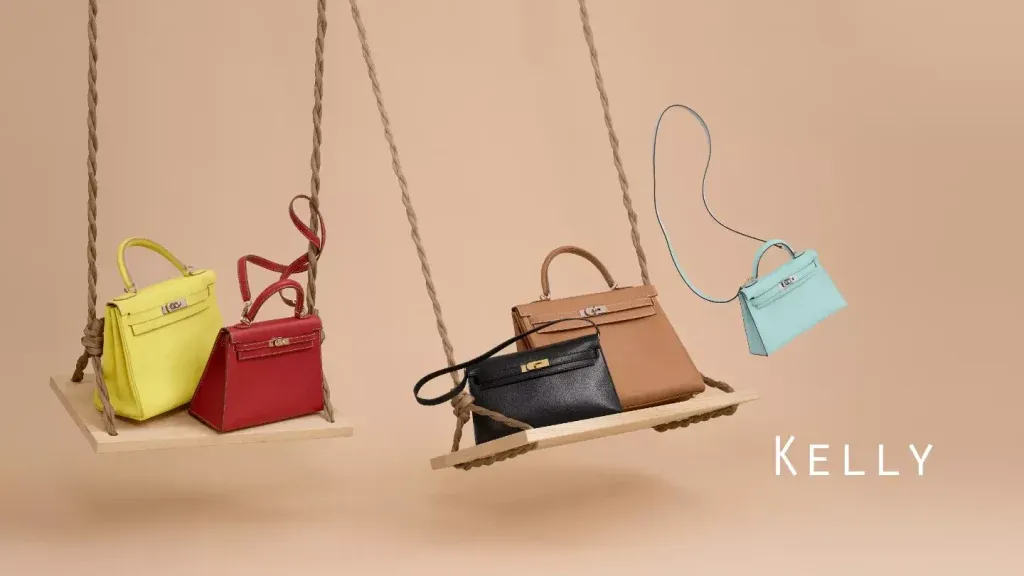 Photo: Hermès, via luxurioux.com
None of these people are doing anything that a traditional leather craftsperson hasn't done for generations. What they are doing — brilliantly, it must be said — is speaking the language of the Instagram wellness economy fluently enough that their customers feel they are investing in something meaningful rather than simply paying for a repair.
The Return: A Reunion Scene
The moment a restored bag is returned to its owner is, according to multiple practitioners, often genuinely moving. There are photographs. There are occasionally tears. One restorer described a client who 'held the bag to her chest for a full minute before speaking'. Another recalled a woman who brought her late mother's handbag for restoration and cried throughout the collection appointment.
This is, admittedly, touching. It is also a reminder that what the luxury bag wellness industry is really selling is not leather treatment but the validation of attachment — the reassurance that it is acceptable, even admirable, to care this much about an object. That the object costs £650 new and the restoration costs £340 and the whole enterprise is, financially speaking, operating in a grey area between 'reasonable' and 'absolutely not' is, in the end, beside the point.
Darren understands this. He learned it not from a business course but from watching what happened when he stopped calling himself a cobbler. 'The moment I changed the language,' he says, leaning back in his chair in the Atelier, surrounded by other people's bags in various states of becoming, 'everything changed.'
He is, we think, going to be fine.