Sole Confusion: The Great British Footwear Logic Meltdown That Has Us Wearing Trainers to Christenings and Stilettos to Mud Wrestling
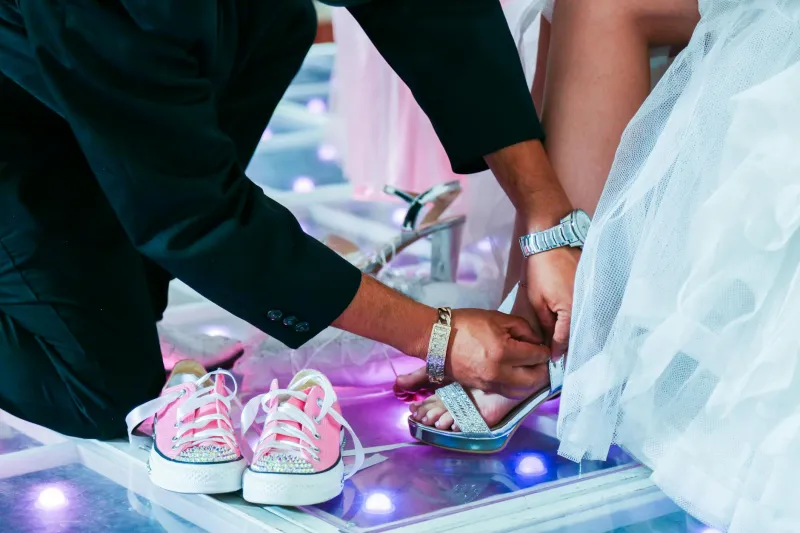
The Great Footwear Reversal
Something has gone catastrophically wrong with British shoe logic. We have collectively decided that trainers—specifically chunky white trainers that look like they were designed by someone who had never seen feet before—are appropriate for every formal occasion from weddings to job interviews, while simultaneously insisting that stiletto heels are perfectly reasonable footwear for outdoor events held on grass in the middle of winter.
This isn't just a fashion trend; it's a complete breakdown of cause-and-effect reasoning that would make philosophers weep. We've created a parallel universe where the laws of physics, practicality, and basic common sense have been suspended in favour of what can only be described as aggressive footwear contrarianism.
The Trainer Takeover
When did trainers become acceptable formal wear? There was no announcement, no official decree from the footwear authorities. One day we all woke up and collectively agreed that shoes designed for running marathons were perfectly appropriate for attending christenings, job interviews, and dinner parties.
The transformation has been so complete that leather shoes now look aggressively formal, like wearing a tuxedo to Tesco. Meanwhile, £200 trainers with more technology than the International Space Station are considered understated elegance. We've reached the point where the groom wearing white trainers to his own wedding is considered more stylish than his father in proper dress shoes.
 Photo: International Space Station, via cdn.mos.cms.futurecdn.net
This shift has created some delightful contradictions. People will spend £300 on "premium" trainers for a black-tie event but consider £100 too expensive for actual dress shoes. We'll research trainer technology for hours—reading about air cushioning, impact absorption, and moisture management—for shoes we'll wear exclusively on carpeted floors.
The Heel Paradox
While trainers have conquered formal occasions, high heels have somehow become the go-to choice for every situation where they're spectacularly inappropriate. Garden parties on lawns, outdoor weddings, music festivals, country walks—if there's soft ground, uneven surfaces, or any possibility of sinking, you can guarantee British women will be there in four-inch stilettos, grimly determined to maintain their height advantage over the terrain.
This has created a fascinating spectacle: watching someone navigate a muddy field in heels is like watching a nature documentary about a species that has forgotten how to adapt to its environment. The heel-to-grass relationship has become Britain's most consistent source of unintentional comedy, yet nobody acknowledges the absurdity.
The dedication is admirable in its complete irrationality. Women will spend twenty minutes extracting their heels from soft ground at outdoor events, leaving a trail of small holes like a very glamorous woodpecker, and still insist that heels were the right choice because "they go with the outfit."
The Seasonal Madness
British footwear choices have developed their own microclimate that exists independently of actual weather conditions. Summer weddings in country gardens are attended in shoes designed for nightclub floors. Winter formal events are navigated in footwear that offers all the grip and warmth of ice skates.
The most spectacular example of this disconnect occurs at outdoor Christmas markets, where the combination of cobblestones, mulled wine, and inappropriate footwear creates scenes reminiscent of a very festive disaster movie. Yet every year, the same people make the same choices, as if the laws of physics might have changed since last December.
The Social Agreement
The most remarkable aspect of this footwear revolution is that we've all agreed not to comment on it. Nobody mentions that Sarah's wearing running shoes to her grandmother's funeral. Nobody questions why Emma chose stilettos for the company team-building exercise in the Lake District. We've developed a collective blind spot for footwear inappropriateness that would impress a cult.
 Photo: Lake District, via baxter.photos
This unspoken agreement extends to the obvious practical consequences. We'll watch someone struggle across a gravel car park in heels without offering assistance or commentary. We'll attend outdoor events where half the guests are aerating the lawn with their footwear choices and pretend this is normal behaviour.
The Industry Response
Footwear manufacturers have responded to this logic breakdown with impressive opportunism. They've created "dress trainers" (trainers that look slightly less like trainers) and "comfort heels" (heels that are marginally less uncomfortable). These compromise products satisfy nobody but sell to everybody, proving that the market will always find a way to monetise confusion.
The marketing has become increasingly creative in its attempt to justify these choices. Trainers are now "versatile lifestyle footwear" suitable for "modern living." Heels are "statement pieces" that "elevate any look," regardless of whether they literally elevate you out of the ground you're trying to walk on.
The Future of Foot Logic
Where does this end? Are we heading towards a future where the entire British population attends everything in one rotating pair of New Balance 574s? Will we eventually develop formal stilettos for mountain hiking and technical running shoes for black-tie events?
Perhaps we're already there. The logical endpoint of this footwear evolution might be a single, universal shoe that's simultaneously appropriate for every occasion and completely inappropriate for all of them. We'll call them "lifestyle optimisation platforms" and charge £400 for them.
The Philosophical Implications
This footwear rebellion represents something deeper than mere fashion confusion. It's a rejection of the idea that form should follow function, replaced by the revolutionary concept that form should actively oppose function while everyone pretends not to notice.
We've created a society where choosing appropriate footwear for the occasion is considered less important than making a style statement, even when that statement is "I have fundamentally misunderstood the requirements of this situation."
The Beautiful Madness
Perhaps there's something quintessentially British about this approach to footwear—the determination to prioritise style over practicality while maintaining a stiff upper lip about the consequences. We may be the only nation that considers it normal to watch someone sink into a lawn in stilettos without offering commentary, or to attend formal events in shoes designed for athletics without anyone batting an eyelid.
In a world of increasing conformity, maybe our collective decision to abandon all footwear logic is actually a form of creative expression. We're not making poor shoe choices—we're making art. Very uncomfortable, highly impractical art that leaves small holes in soft ground and requires frequent stops for heel extraction, but art nonetheless.